You love your dog and want a yard where they play safely without getting through a gap or jumping a fence that isn’t quite tall enough. Choosing the right fence height and spacing is essential to creating a secure, pet-friendly backyard. When you’re designing with dogs in mind, every detail matters—from their jumping ability to how determined they are to investigate whatever is happening on the other side of the yard.
Dogs are a big part of American life. According to the American Pet Products Association, 94 million households have at least one pet, and 51% of U.S. households (68 million) own a dog. With so many pets spending time in fenced-in yards, getting the design right is essential. So what does that mean for your backyard fence design?
As a family-owned fencing company, we help homeowners create safe, long-lasting outdoor spaces every day. This guide breaks down fence height, spacing, and design choices so you can create the best setup for your dog—no matter their size, breed, or escape habits.
Table of Contents
Why Fence Height & Spacing Matter
Fence Heights
Vertical vs. Horizontal
Fence Designs
Gate, Latch & Lock Safety
Best Fencing Materials
Why Buffalo Valley Fence
Conclusion
TL;DR - How to Choose the Right Fence Height & Spacing for Your Dog
Choosing the right fence height and spacing is essential for keeping dogs safely contained.
Small dogs typically need 3-4 ft, medium dogs 4-5 ft, and large or athletic breeds 5-6 ft. (Most towns and HOA don’t allow for anything over 6ft.)
Vertical boards and tight spacing prevent climbing and squeezing; solid panels work best for determined dogs.
Design your fence around your dog’s escape habits—jumping, climbing, digging, or squeezing.
Gates are the most common escape point, so strong latches, tight gaps, and level installation are key.
Vinyl, wood, aluminum, and chain link all work for different dogs, but vinyl is often best for high-energy breeds.
A dog-safe fence should balance safety, durability, and the way your dog behaves—not just appearance.
Why Fence Height & Spacing Matter More Than Most People Realize
A fence that’s too short or spaced too wide turns any dog—big or small—into an escape artist. Most of the time, the issue isn’t misbehavior. It’s simply that dogs are curious, energetic, and surprisingly creative when they want to explore something outside the yard. A fence that doesn’t account for your dog’s instincts can make it too easy for them to jump, dig, squeeze, or push their way out. In other words, a “good enough” fence often isn’t good enough for a smart dog.
Choosing the right height and spacing solves these problems before they begin. When you design the fence around your dog’s abilities, you create a relaxing yard for both you and your pet.
Fence Heights for Small, Medium & Large Breeds
Choosing the right fence height begins with a clear understanding of your dog. Not all dogs approach a fence the same way. A terrier won’t jump like a German shepherd, and a beagle will test gaps in a way a Labrador never will. Planning for your dog’s breed, size, and energy level is the best way to start. Here’s a simple guide to fence height based on your dog’s size.
Small dogs usually aren’t powerful jumpers, but they are excellent at finding weak spots around the bottom of a fence. A shorter fence works well as long as spacing is tight and the bottom edge sits close to the ground.
Medium-sized dogs are agile and energetic. Many can clear a 4-ft fence, especially if something catches their attention. A height of 5–6 ft gives you a safer buffer.
Large Breeds (German Shepherds, Huskies, Labs, Mastiffs)
Recommended Height: 5-6 ft
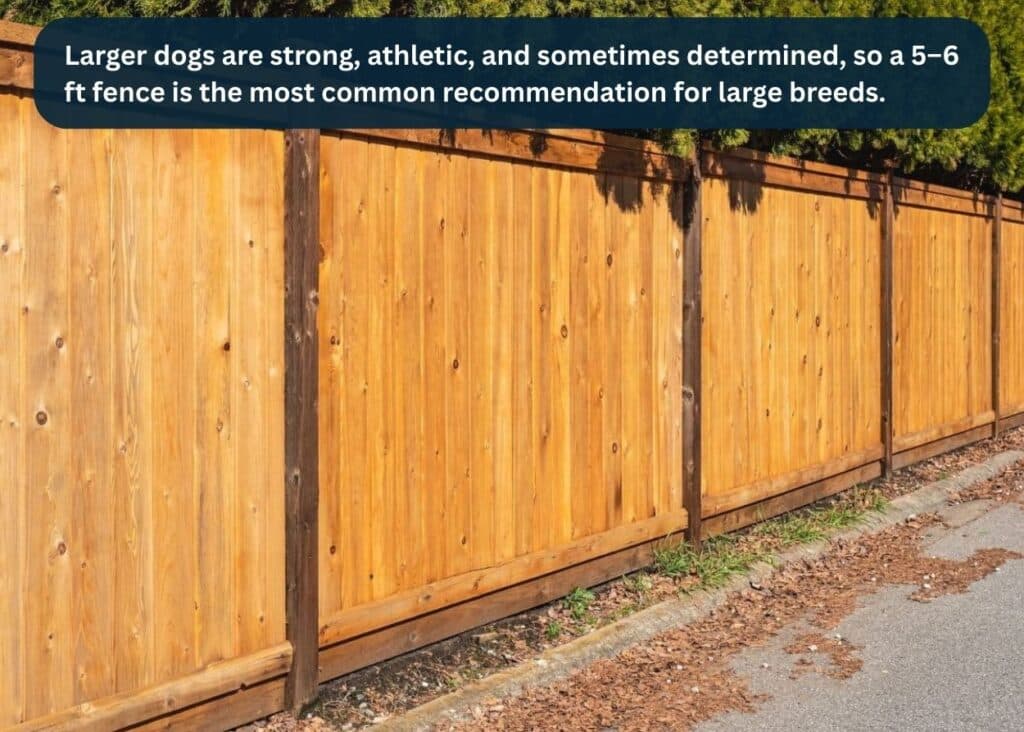
Larger dogs are strong, athletic, and sometimes determined, so a 5–6 ft fence is the most common recommendation for large breeds.
However, a lot of big dogs can jump six feet when they’re excited or motivated, and a small number of exceptional athletes can clear even higher heights. In practice, a 6-ft fence contains the vast majority of dogs, while only the most athletic dogs ever challenge an 8-ft fence. In most residential neighborhoods, 6 ft is the common maximum allowed height for backyard fences under HOA rules or local regulations, so before planning anything taller than 6 ft, check your zoning and HOA requirements—going higher may require special approval.
Vertical vs. Horizontal Spacing
Fence spacing matters just as much as height. Even a tall fence fails if the gaps are too wide or the boards create footholds.
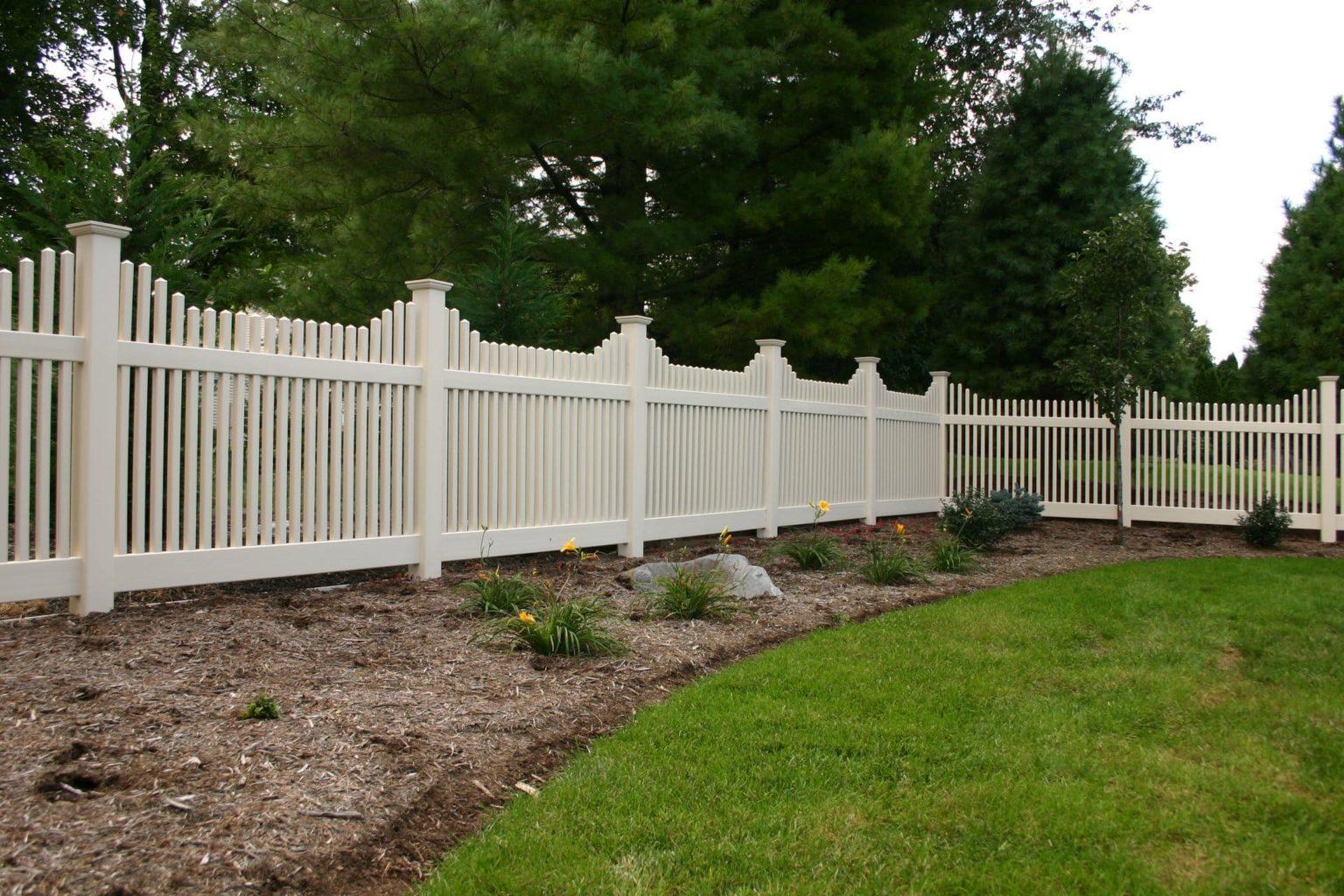
Vertical Boards Are Usually the Safest
Vertical boards make climbing difficult and remove the ladder-like effect created by horizontal boards. This setup is cleaner, simpler, and generally much harder for dogs to scale.
How Wide Is Too Wide?
If your dog’s head fits through a gap, their body will probably fit through too.
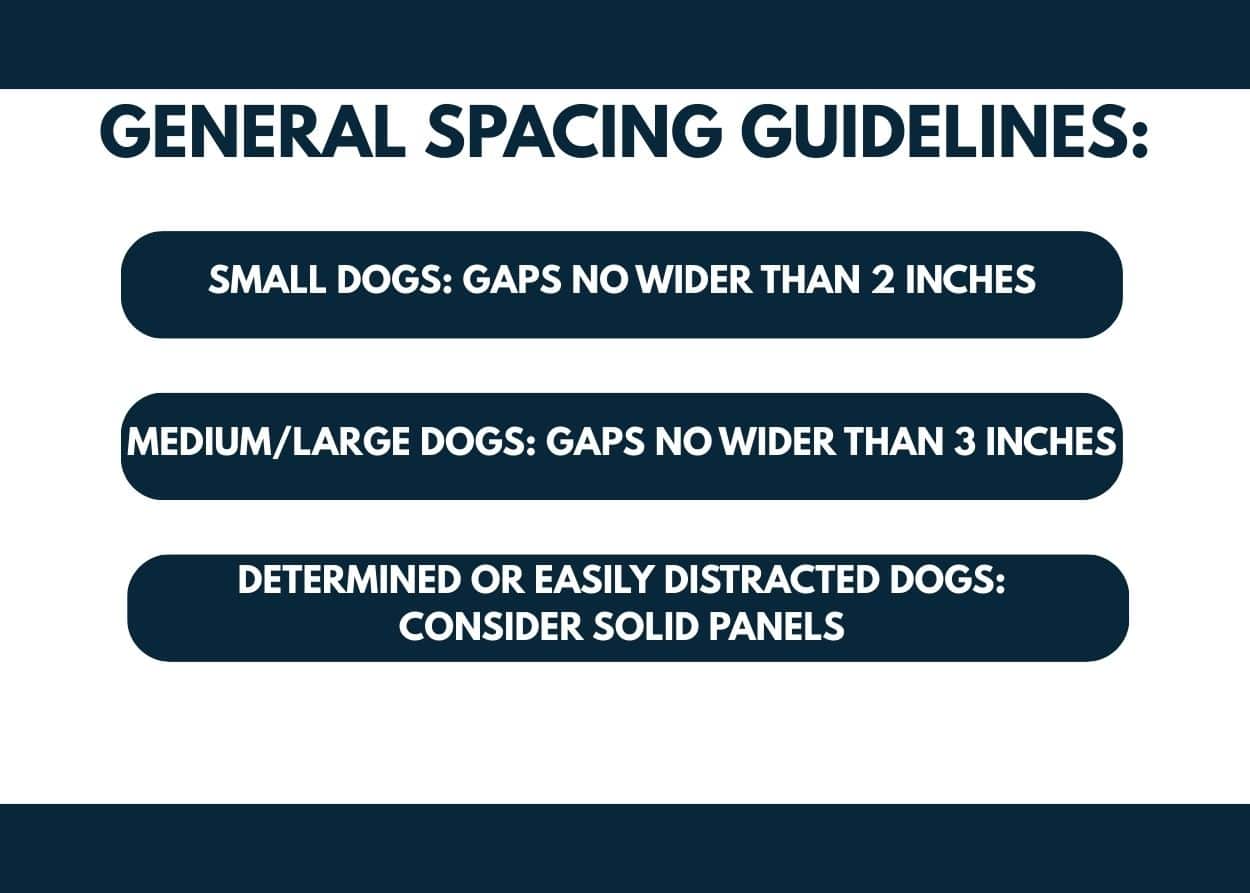
General spacing guidelines:
Small dogs: gaps no wider than 2 inches
Medium/large dogs: gaps no wider than 3 inches
Determined or easily distracted dogs: consider solid panels
Spacing also includes the bottom of the fence. Even a small opening becomes a digging opportunity. Keeping the fence close to the ground—or adding buried wire mesh—helps prevent digging under it.
Fence Designs for Jumpers, Climbers & Escape Artists
Once you’ve chosen the right height and spacing, the next step is selecting a fence design which matches how your dog tries to escape. Some dogs jump. Some climb. Some dig. And some will try every method until one works. So how do you stay one step ahead of an escape artist?
If your dog jumps:
Choose fences 6–8 ft tall.
Avoid stepping rails or decorative elements.
Use solid panels to block distractions.
If your dog climbs:
Avoid chain link and horizontal-board fences.
Use smooth vinyl or aluminum.
Keep the side facing your dog flat and rail-free so there’s nothing they can use as a foothold.
If your dog squeezes through gaps:
Tighten vertical spacing.
Reinforce gate edges.
Use overlapping boards when possible.
If your dog digs:
Add buried L-shaped wire mesh.
Install panels close to the ground.
Consider gravel or paver edging.
Matching your fence design to your dog’s habits makes a big difference in the security of your yard. Keeping that in mind during planning helps ensure the fence is truly safe, not just attractive.
Gate, Latch & Lock Safety
More dogs escape through the gate than anywhere else, which makes gate design one of the most important parts of a dog-safe yard.
Choose a reliable latch system
Self-closing hinges and sturdy, higher-placed latches prevent accidental openings from kids, guests, or curious dogs.
Watch for side and bottom gaps
Gates naturally create more small spaces than fence panels, and even a narrow opening can be enough for a determined dog to slip through.
Keep the gate reinforced and level
A sagging gate can create gaps at the bottom or sides. Strong posts and proper alignment prevent shifting over time.
Avoid climbable decorations
Even small decorative elements become climbing steps for energetic dogs.
A secure gate keeps your entire fence working as intended, which is why we reinforce and check every gate we install.
4 Backyard Fencing Options for Dogs
Some fencing materials naturally hold up better to strong or active dogs. Here’s how the most common options compare:
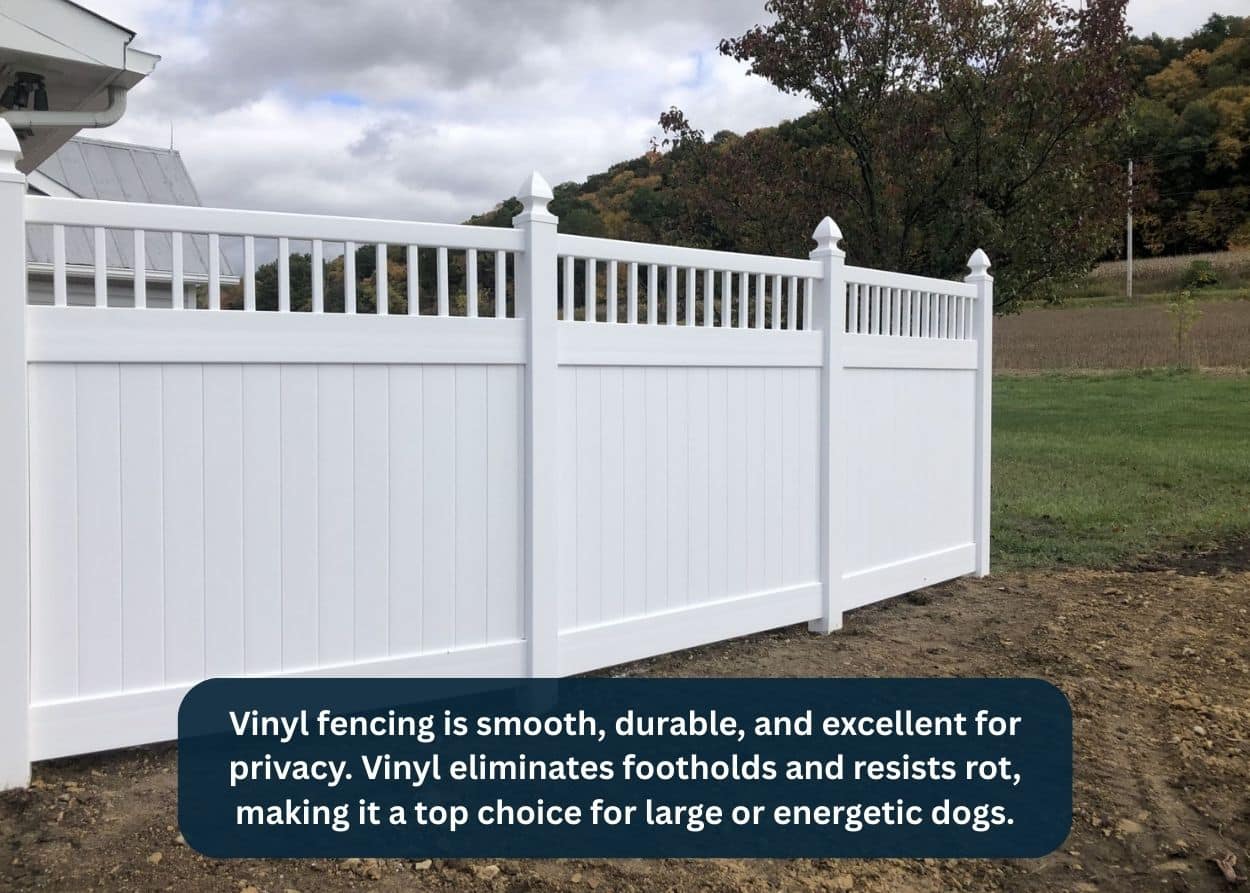
1. Vinyl Fencing
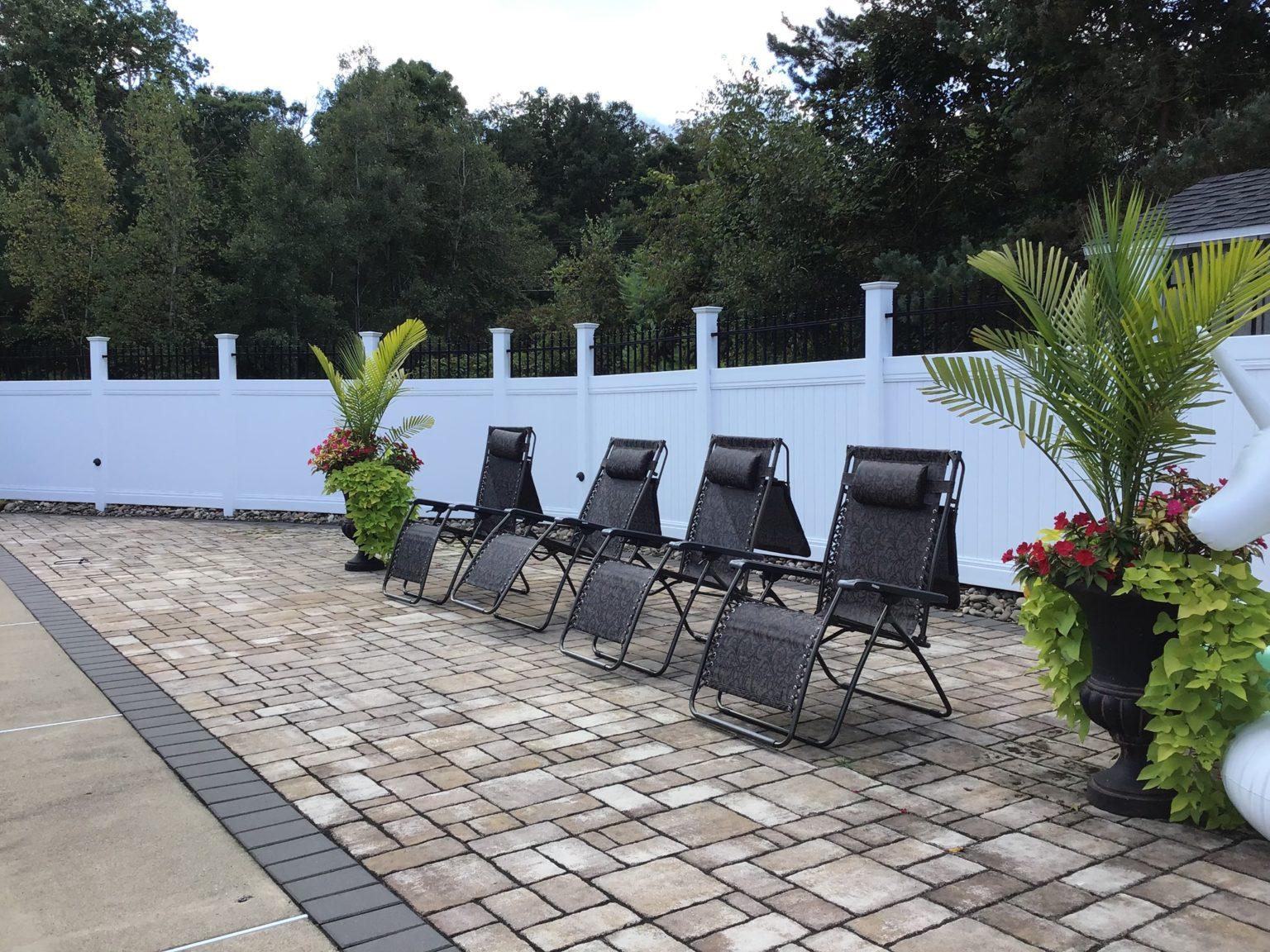
Smooth, durable, and excellent for privacy. Vinyl eliminates footholds and resists rot, making it a top choice for large or energetic dogs.
2. Wood Fencing
A classic, customizable option. Wood can be built with tight spacing and solid panels, but it requires more maintenance and may be vulnerable to chewing.
3. Aluminum Fencing
Strong and low-maintenance. Works well as long as picket spacing is tight enough to prevent squeezing through. Standard spacing for aluminum fencing is 3 ½ inches.
4. Chain Link
Budget-friendly but not ideal for climbers or easily stimulated dogs. Privacy slats help, but many dog owners eventually switch to solid panel fencing.
If you’re unsure which material is best for your dog and property, we can help you compare options based on strength, visibility, and long-term durability.
Why Central PA Homeowners Trust Buffalo Valley Fence & Decks
Homeowners choose us because we don’t just install fences—we build fences that last. When dogs are part of the family, “lasting” means safe, strong, and designed for real-life use.
Our crews keep work areas clean, respect your home, and build with long-term durability in mind.
Whether your dog is small and quiet or large and energetic, we design fences thatgive you confidence every day.
Conclusion: A Safe, Dog-Friendly Yard Starts With the Right Fence Design
Choosing the right fence height and spacing isn’t guesswork. It’s about understanding your dog’s size, instincts, and energy level. When you match your fence to your dog’s needs, you create a backyard where they enjoy themselves—and you enjoy peace of mind.
Imagine your dog running freely without squeezing through, jumping over, or digging under the fence. That’s what thoughtful design offers. And that’s what we help families build across Central PA.
If you’re ready to create a safe outdoor space for your dog, Buffalo Valley Fence and Decks is here to help. Visit our website to request a quote or contact us at 570-522-0409 to start planning a fence that works for both your home and your dog.
Let’s build a yard where your dog plays freely—and you can finally relax.
Read more about backyard fences in the following blog posts: