Moisture, UV, and pool chemicals are rough on fences. These options balance code compliance, durability, and design:
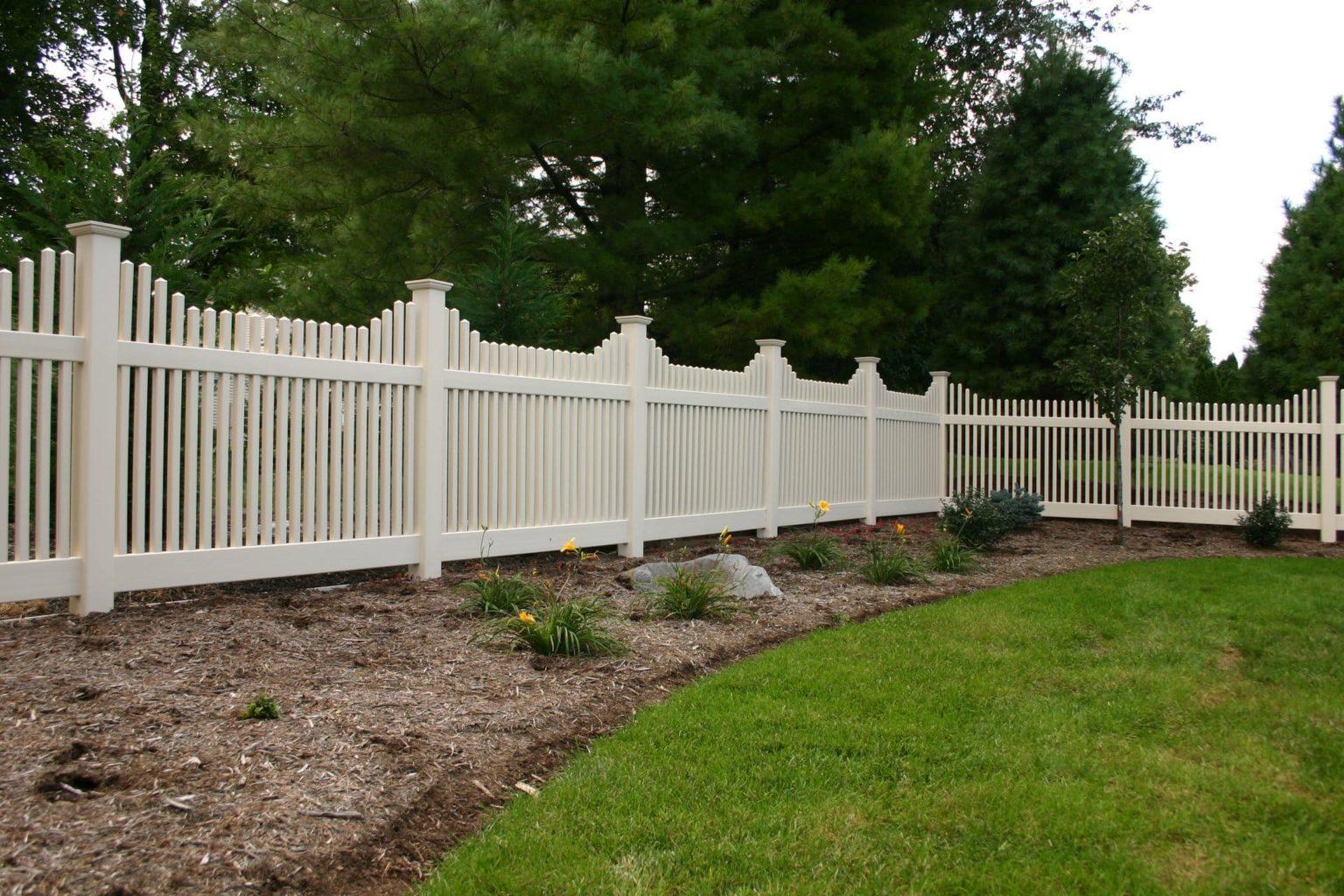
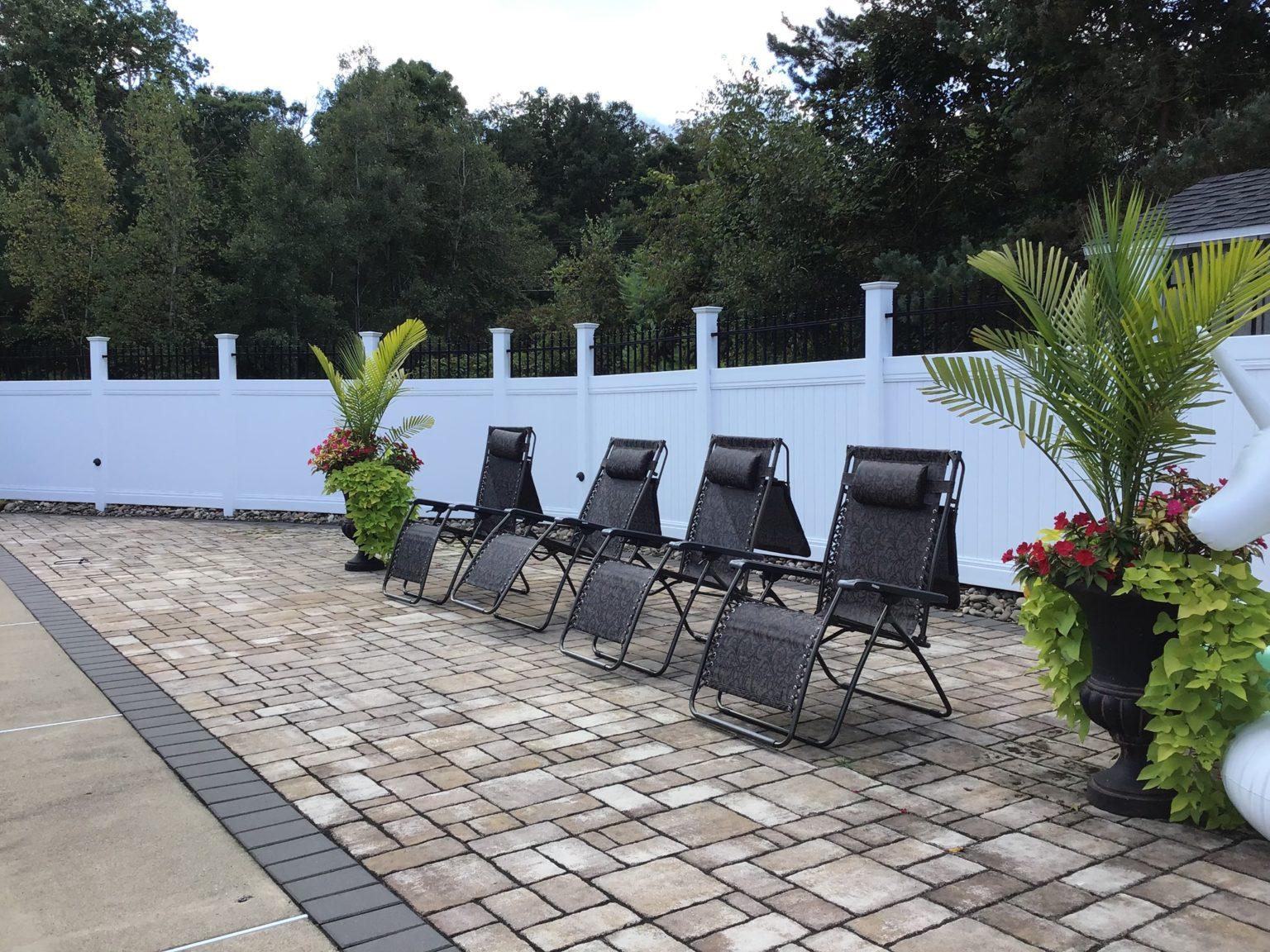
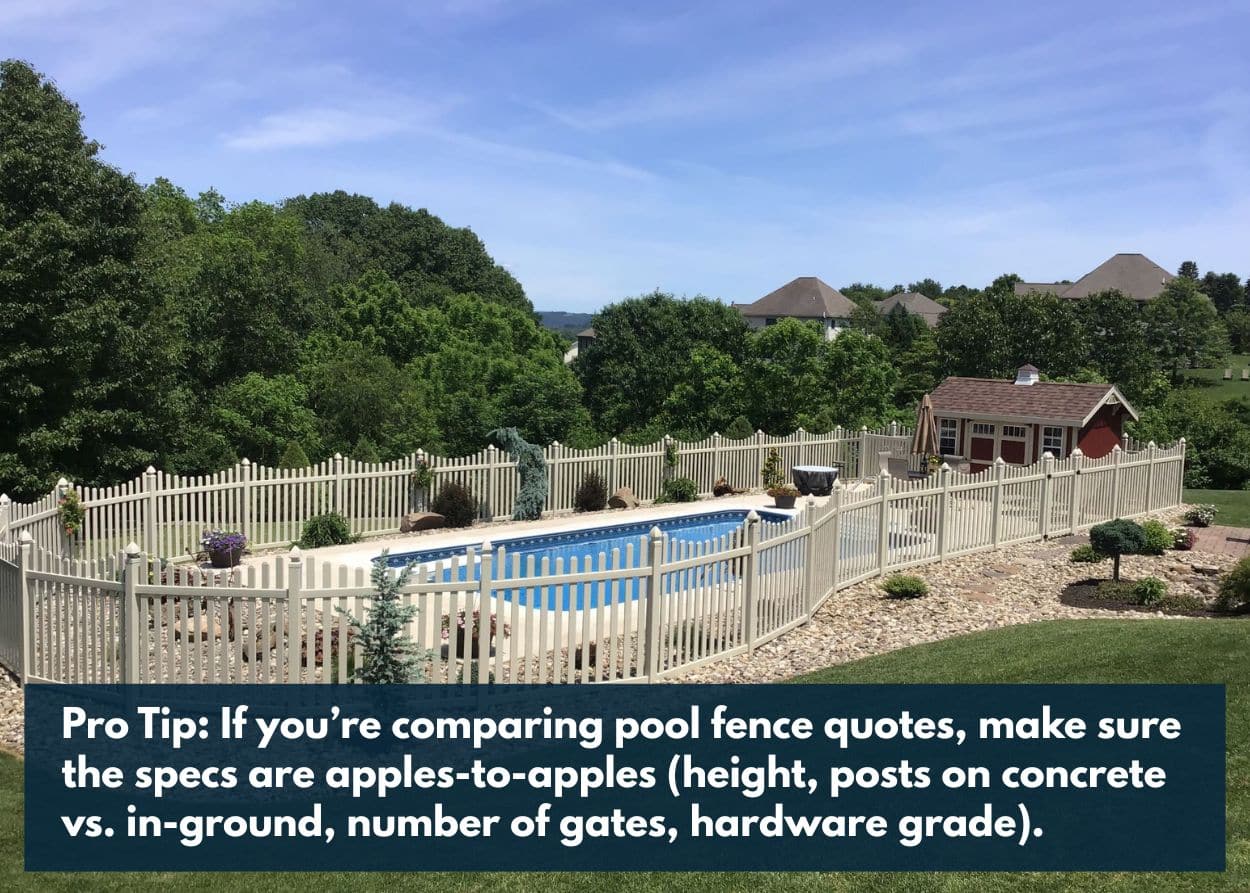
Vinyl (PVC)
Why homeowners choose it: Low-maintenance, won’t rot, and keeps its color. Great for privacy.
Best for: Families who want privacy panels with a clean, solid look and minimal upkeep.
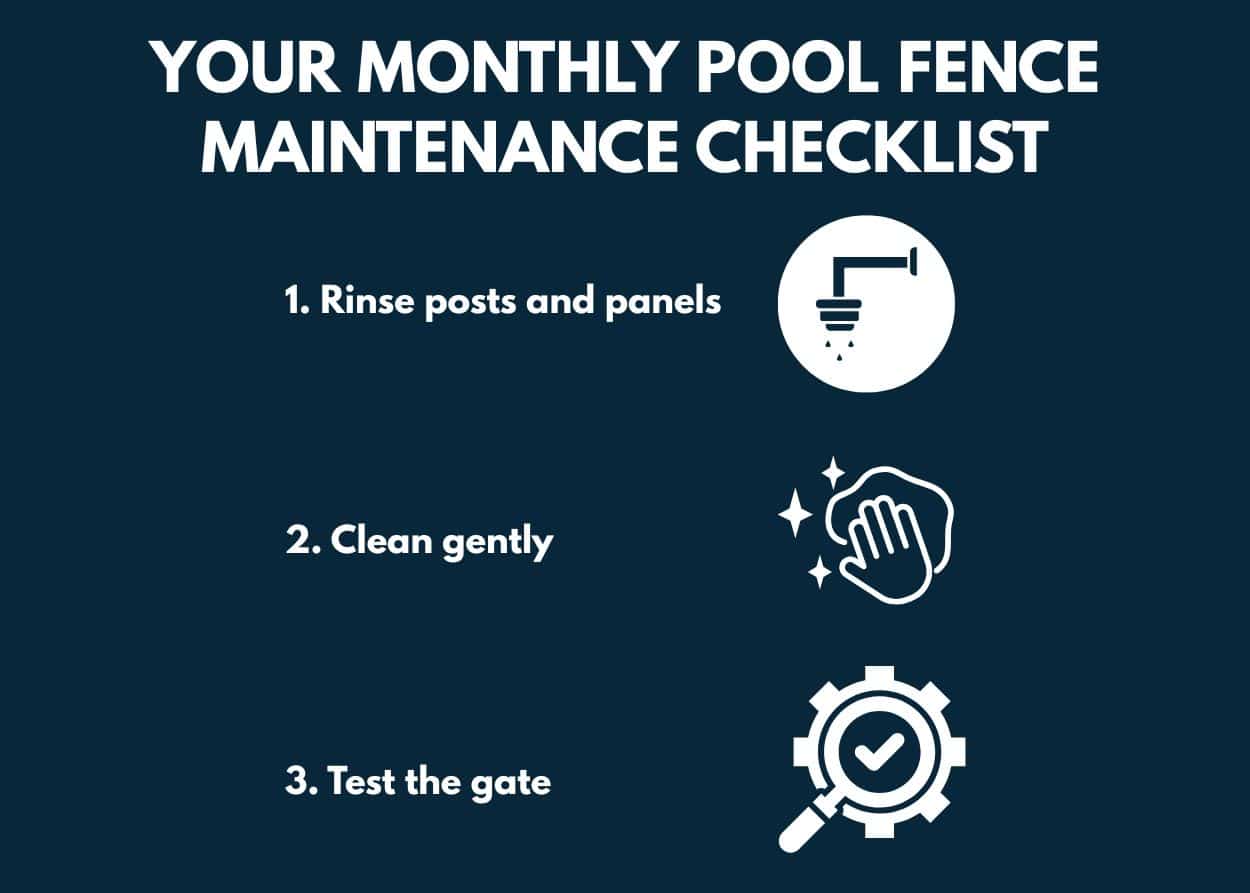
Upkeep: Rinse off splash residue. Wash with mild soap + water (skip abrasives).
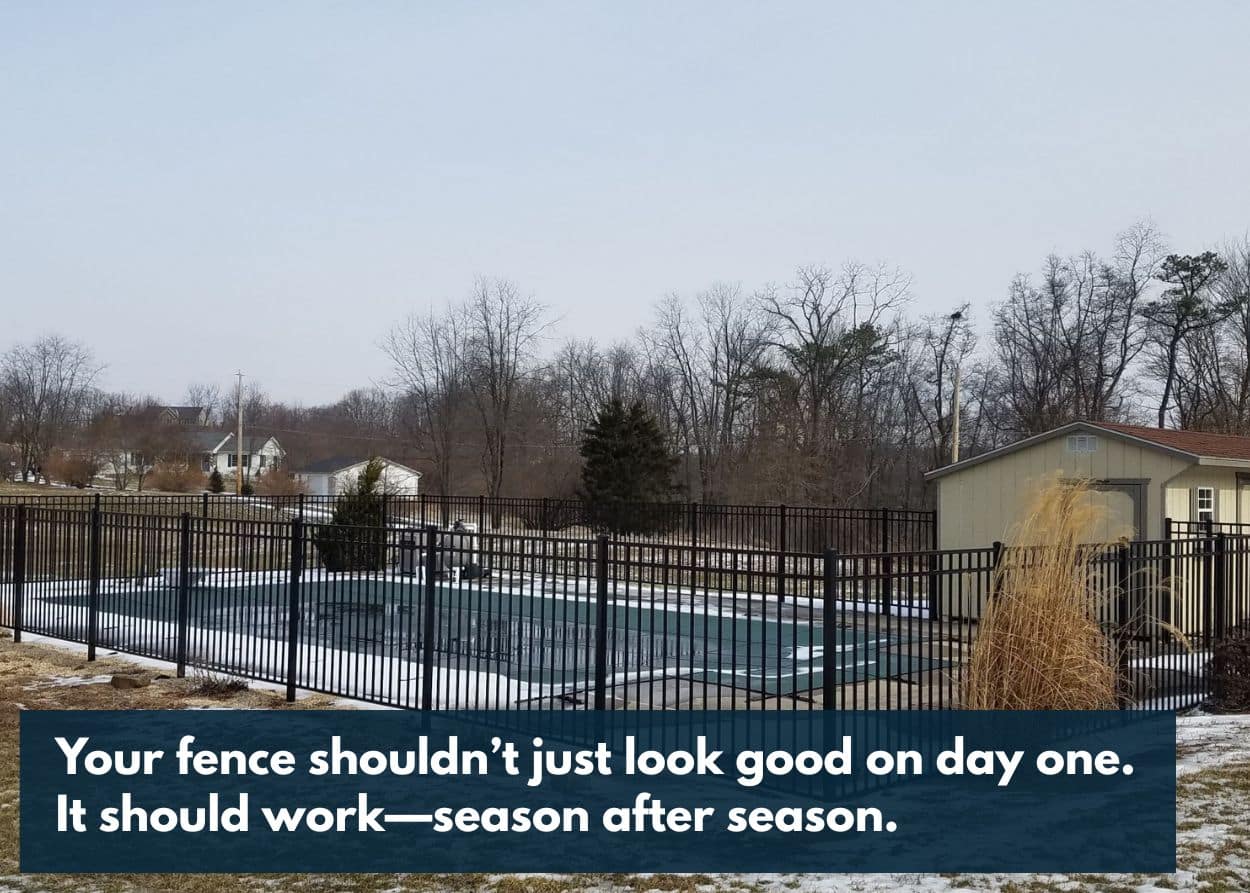
Powder-Coated Aluminum
Why it works: Naturally corrosion-resistant; powder coat adds another shield against moisture and pool chemicals. It’s the go-to for open picket styles that meet pool code.
Best for: Modern black picket aesthetics with long life and minimal maintenance. Allows for open sightlines to the water.
Saltwater caution: Salt systems can accelerate corrosion—choose quality coatings and rinse hardware after splash-heavy days.
Composite
Why it stands out: Warm wood-look without constant staining; resists rot and insect damage; generally weather-resistant and low-maintenance.
Best for: Homeowners who love the warmth of wood but want lower upkeep.
Glass (Tempered/Laminated Panels)
Why it’s stunning: Sleek, unobstructed views—excellent sightlines to the water. Use tempered/laminated glass compliant with building-code glazing rules for guards/rails.
Best for: Design-forward spaces where sightlines matter (and privacy is handled elsewhere).
Note: Gates must still self-close/self-latch to pass pool code.
Removable Mesh (for added layers)
Why parents like it: Adds a child-resistant barrier inside the primary fence; common around pools with young kids. Look for ASTM F2286 compliance.
Best for: Families who want temporary extra protection during toddler years.
Good to know: Look for systems that meet safety standards; they pair well with any primary fence.
Wood (Pressure-treated or Cedar)
Why people pick it: Warm, natural look; excellent for classic privacy.
What to know: Needs regular sealing/staining; watch for swelling/warping near splash zones. (If you’re going with wood, we recommend privacy designs that still meet gap and climb resistance rules.)
Chain Link (with code-compliant mesh)
Why it’s practical: Budget-friendly and tough. Can meet code with proper mesh size and top/bottom treatments; add privacy slats where allowed.
Best for: Large yards where cost and durability are key—and privacy is less critical.
Good to know: Can meet code with the right mesh and treatments. Add privacy slats where allowed.
Tip: For hardware (hinges, latches, fasteners) near chlorinated or salt pools, choose higher-resistance alloys (e.g., 316 stainless) for better chloride resistance.