You’ve decided your yard needs a fence. That’s the easy part. Picking the right material that fits what you want your fence to do, in terms of looks and functionality, is what many homeowners struggle with.
It’s a bigger decision than it looks. A fence isn’t a throw pillow you swap out next season. It’s something you’ll look at every single day for the next 20 or 30 years, so the wrong pick means either wasted money or a fence that looks tired long before you’re ready to replace it.
And when it comes to fence materials that last, two names come up again and again: aluminum and vinyl. Both are low-maintenance, look great, and are constantly compared, usually with a lot of conflicting back-and-forth about which one is better.
The thing is, it depends. And we’ll talk about why.
At Buffalo Valley Fence & Decks, we’ve installed both across Central PA since 2005. We’ve watched how each holds up to our snowy winters, our freeze-thaw springs, and everything from poolside patios to sloped backyards. So instead of picking a favorite, let’s walk you through how aluminum and vinyl really compare and help you match the right one to your property.
Let’s break it down.
Table of Contents
Fence Comparison
Aluminum Benefits
Vinyl Benefits
Key Differences
Choosing the Right Fence
Final Thoughts
TL;DR - Aluminum vs. Vinyl Fencing: Which Is Right for Your Property?
Short on time? Here’s the quick version:
Aluminum is the strongest and longest-lasting of the two. It’s rust-proof, holds up in wind and snow, and is the go-to for pools and front yards. The catch? You can see right through it, so it’s not built for privacy.
Vinyl is the privacy pick. Solid panels block the view, soften the look of your yard, and usually cost a little less upfront. It can get brittle in extreme cold, though.
Both are far easier to care for than wood, and both add real curb appeal.
Your real decision comes down to two questions: Do you want privacy or an open view? And what does your yard actually deal with?
Aluminum vs. Vinyl Fencing at a Glance
Before we compare them, it helps to know what each one actually is.
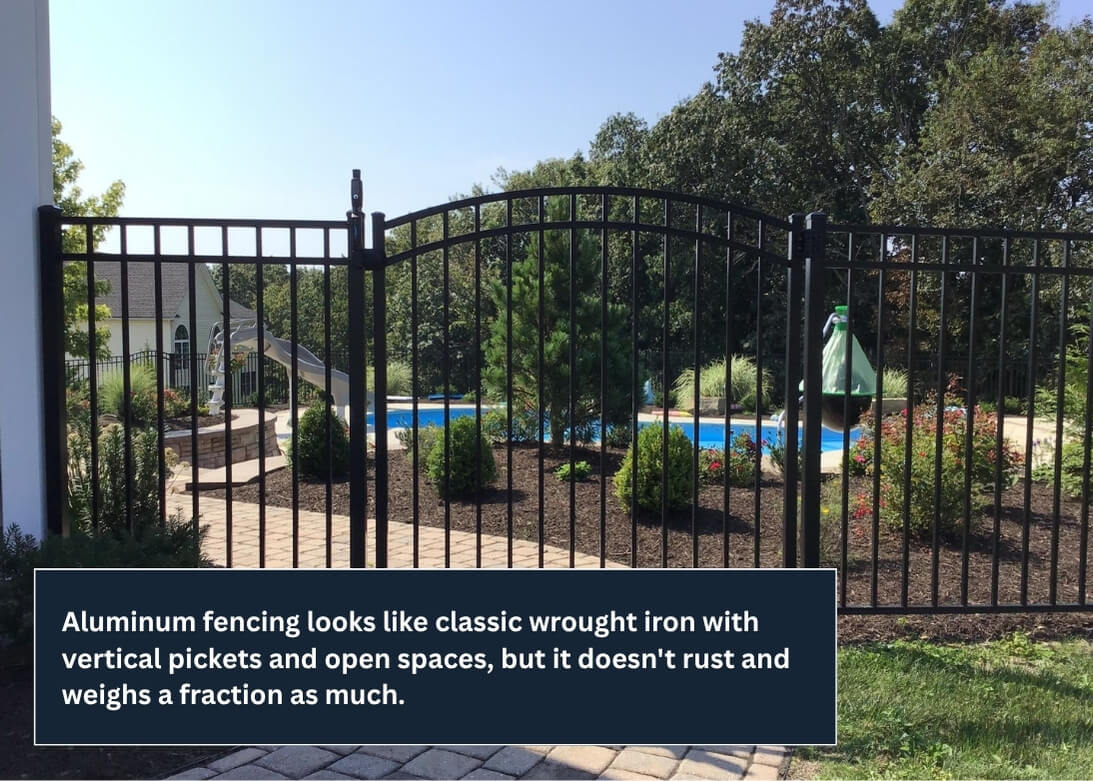
Aluminum fencing is a metal fence with vertical pickets and open spaces between them, similar to the look of classic wrought iron. It doesn’t rust like iron or steel, and it weighs a fraction as much. It also has a slim, sleek profile, so it tends to blend into your yard and landscaping rather than steal the show. We offer it in white, bronze, and black to match almost any home.
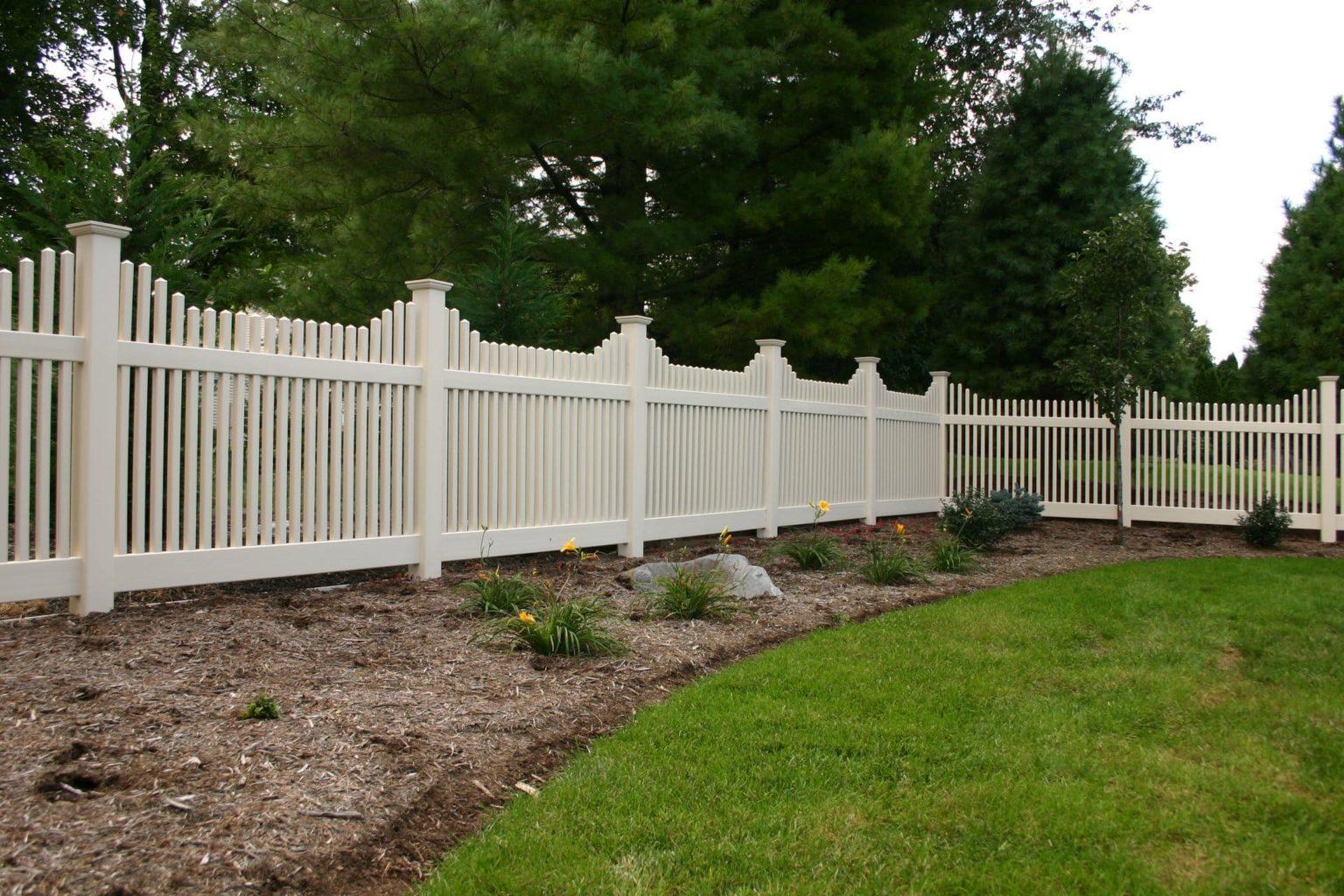
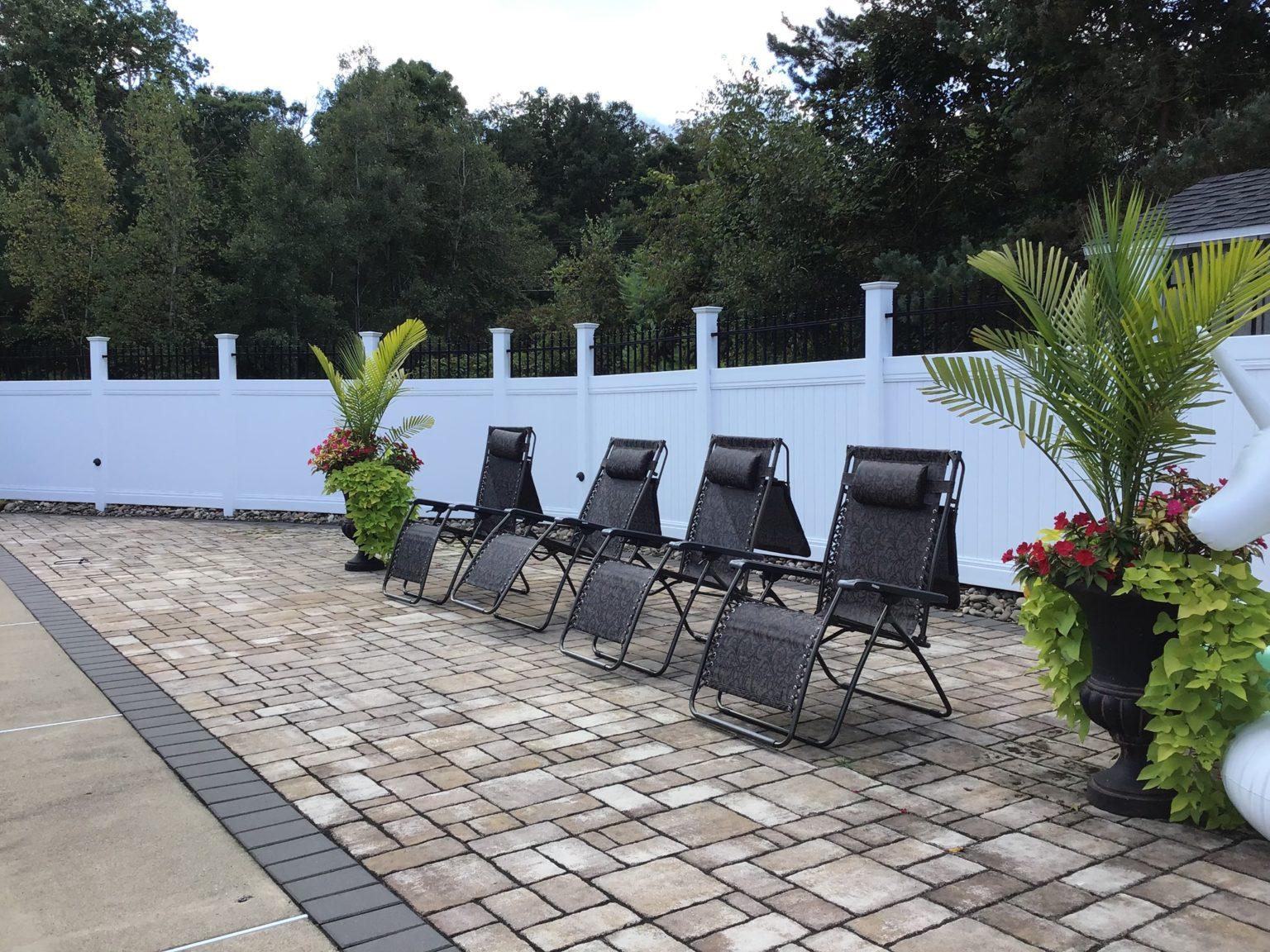
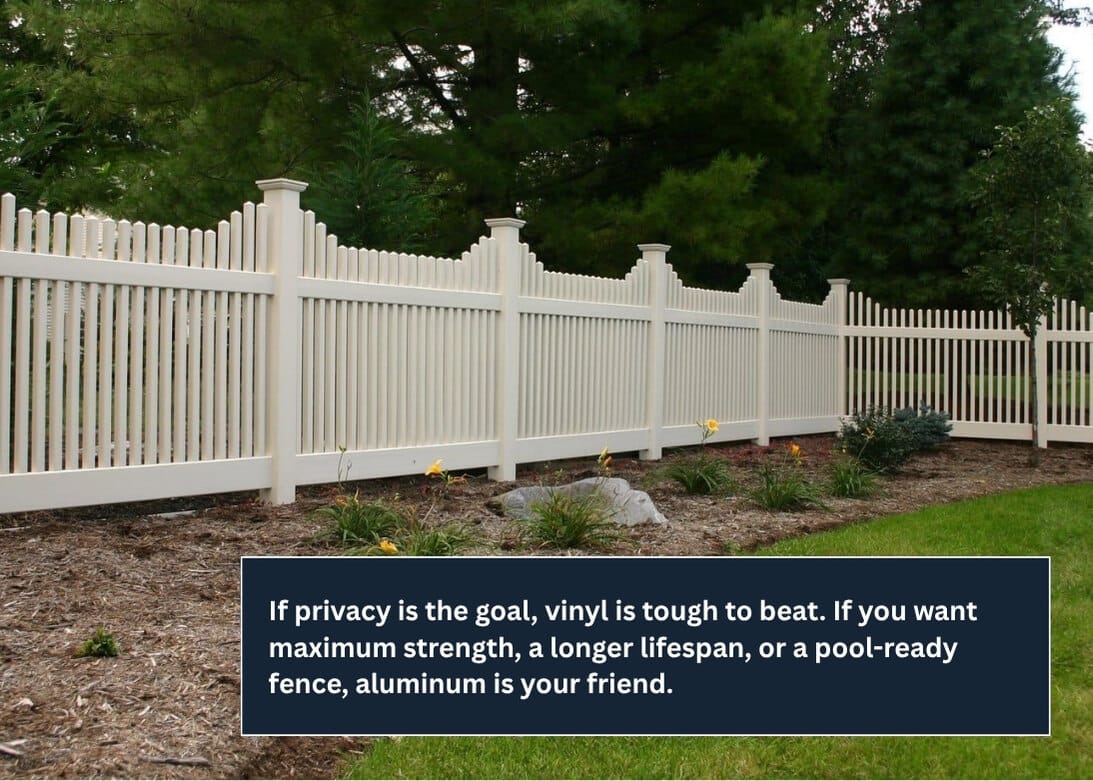
Vinyl fencing is made from PVC, a tough, weather-resistant plastic, and it’s more versatile than most people expect. It’s the only one of the two that can give you a true privacy fence with solid panels. But privacy is just one option. Vinyl also comes in open styles that let the view through, including:
Yard fence for a clean, defined boundary
Picket fence for that classic, welcoming front-yard look
Ranch rail for an open, country feel
So don’t box vinyl in as “the privacy fence.” It does far more than that. It also has a bolder, more solid look than aluminum, which means it tends to stand out in a yard rather than fade into the background. We offer vinyl in almond, white, and clay, and it never needs treating or repainting.
The easiest way to hold the two side by side:
Aluminum: sleek and understated, an open view, blends into the scenery.
Vinyl: more presence and more style options, from full privacy to open rail, and it makes more of a statement.
Keep that contrast in mind, because it shapes almost every other difference on this list.
4 Reasons Homeowners Love Aluminum Fencing
Aluminum has become one of the most popular fence choices around, and for good reason:
It lasts a long time. A quality aluminum fence can last 30 to 50 years or more, according to the home-improvement resourceAngi. That’s often longer than you’ll even own the house.
It won’t rust. Iron and steel corrode over time. Aluminum doesn’t, and a baked-on powder coat keeps the color looking fresh for decades.
It handles weather like a champ. The open picket design lets wind pass right through instead of catching it like a sail. That matters during a Pennsylvania windstorm.
It’s the pool standard. Aluminum is the top choice for pool enclosures, and it’s easy to install in a style that meets local safety codes.
The trade-offs: You can see through it so aluminum won’t hide your backyard from the neighbors. It also tends to cost a bit more upfront than vinyl.
4 Reasons Homeowners Love Vinyl Fencing
Vinyl is the fence people picture when they imagine a clean, private backyard. Here’s why it stays so popular:
Privacy, front and center. Solid vinyl panels block sightlines completely. Your neighbor won’t be watching your weekend cookout, and you won’t be staring at their driveway.
It softens noise. Those same solid panels help buffer road noise and busy-neighbor sounds, which is a nice bonus near a street.
It’s easy to maintain. No rot, no pests, no repainting. A rinse with the garden hose handles most of the cleaning.
It usually costs a little less to install. For many homeowners, vinyl offers the most privacy for the dollar.
The trade-offs: Vinyl can become brittle in extreme cold and may crack from a hard impact, like a fallen branch. And if a panel does crack, you usually replace the whole section rather than a single piece.
Aluminum vs. Vinyl: 6 Differences That Actually Matter
You don’t need a spec sheet for every detail. Instead, you think about the handful of differences the fence makes in your day-to-day life. Here they are, side by side:
Factor
Aluminum
Vinyl
Upfront cost
Usually a bit higher
Often a bit lower
Lifespan
30 to 50+ years
20 to 30 years
Maintenance
Occasional rinse; touch up any chips
Occasional rinse; wash off mildew
Privacy
Low (open pickets, you can see through)
High (solid panels block the view)
Strength
Very strong, rigid metal
Solid, but can crack from hard hits or deep cold
Repairs
Typically, replace the whole section
Swap out a single picket or panel
But what about long-term value? Sticker price is only half the story. Aluminum may cost more on day one, but it tends to last longer, but you will likely need to replace an entire section if it’s damaged, as they are premanufactured sections. On the other hand, vinyl saves you a bit at the start and has more flexibility in repair, giving you the option of replacing a single picket or entire panel. The reality is that neither is a cheaper option in the long run. They just spread the value out differently.
Let’s look at some practical scenarios. We’ll point you toward what you’re actually trying to do:
You want to hide your backyard from neighbors. Go vinyl. Solid privacy panels are exactly what they’re built for.
You’re fencing a pool. Go aluminum. It’s the poolside standard, resists moisture, and installs in pool-safe styles.
Your yard is windy, sloped, or wide open. Go aluminum. Wind slips through the pickets, and the rigid metal follows a hilly grade cleanly.
You’ve got kids and pets to keep in. Either works. Vinyl adds privacy on top of containment. Aluminum adds strength and a see-through view of the yard.
You want a classic, ornamental “estate” look out front. Go aluminum. It gives you that wrought-iron style without the rust or the upkeep.
But what if you’re still torn? That’s normal. Plenty of homeowners even mix the two, using vinyl for a private backyard and aluminum out front for curb appeal. There’s no rule against getting the best of both.
The Bottom Line: Let's Find Your Best Fit
If privacy is the goal, vinyl is tough to beat. If you want maximum strength, a longer lifespan, or a pool-ready fence, aluminum is your friend. Both will serve you well for decades, and both are a big step up from high-maintenance wood.
The best answer, though, depends on your yard. Your slope, your climate exposure, your view, your neighbors, your goals. That’s the part a chart can’t decide for you.
That’s where we come in: We’ve spent nearly two decades installingaluminum fencing andvinyl fencing for homes and businesses across Lewisburg, Selinsgrove, Danville, State College, and the rest of the Susquehanna Valley. We only install materials we trust, including vinyl made in Lancaster County, PA. And we back every job with a 5-year installation warranty plus a limited lifetime warranty on our vinyl and aluminum fencing products.
We may not always be the cheapest quote you get. But you’ll have 100% peace of mind knowing it was done right, the first time.
Ready to talk it through?Request a free quote or give us a call at (570) 522-0409, and we’ll help you find the fence that fits your property, your lifestyle, and your budget.