If you’ve been Googling “Aluminum vs Chain Link Fences for Dogs”, you’re probably trying to solve one crucial problem: Keep your dog safe in the yard—without worrying about escapes, chasing cars, or surprise visits to the neighbor’s porch.
Dogs don’t “stay put” just because we ask nicely. Approximately 15% of pet dogs in the United States go missing within five years, with roughly 10 million dogs and cats stolen annually. Most runaways are found within a mile of their home, and the runaways peak in July due to noise-induced panic, such as fireworks or thunderstorms. Doggone it, it’s a frustrating problem.
At Buffalo Valley Fence & Decks, we can help homeowners and their dogs throughout the Greater Susquehanna Valley choose fencing that fits their property, budget, and family. Because when the dogs are safely contained at home, their humans can rest easy, too.
Let’s break down the pros, cons, safety details, and best-use scenarios for aluminum and chain link fences—so you can pick a fence that actually works for your dog.
A fence can look great, but if it fails at pet containment, it doesn’t matter how great it looks.
While both fence types work for dogs, several factors determine the fence’s effectiveness.
To start, aluminum fencing is great for:
Chain link fencing is selected for:
But the best fence depends less on the material and more on your dog.
Why? Because your dog’s escape style tells you what to build. So, let’s talk about what works and doesn’t work for both types of fencing.
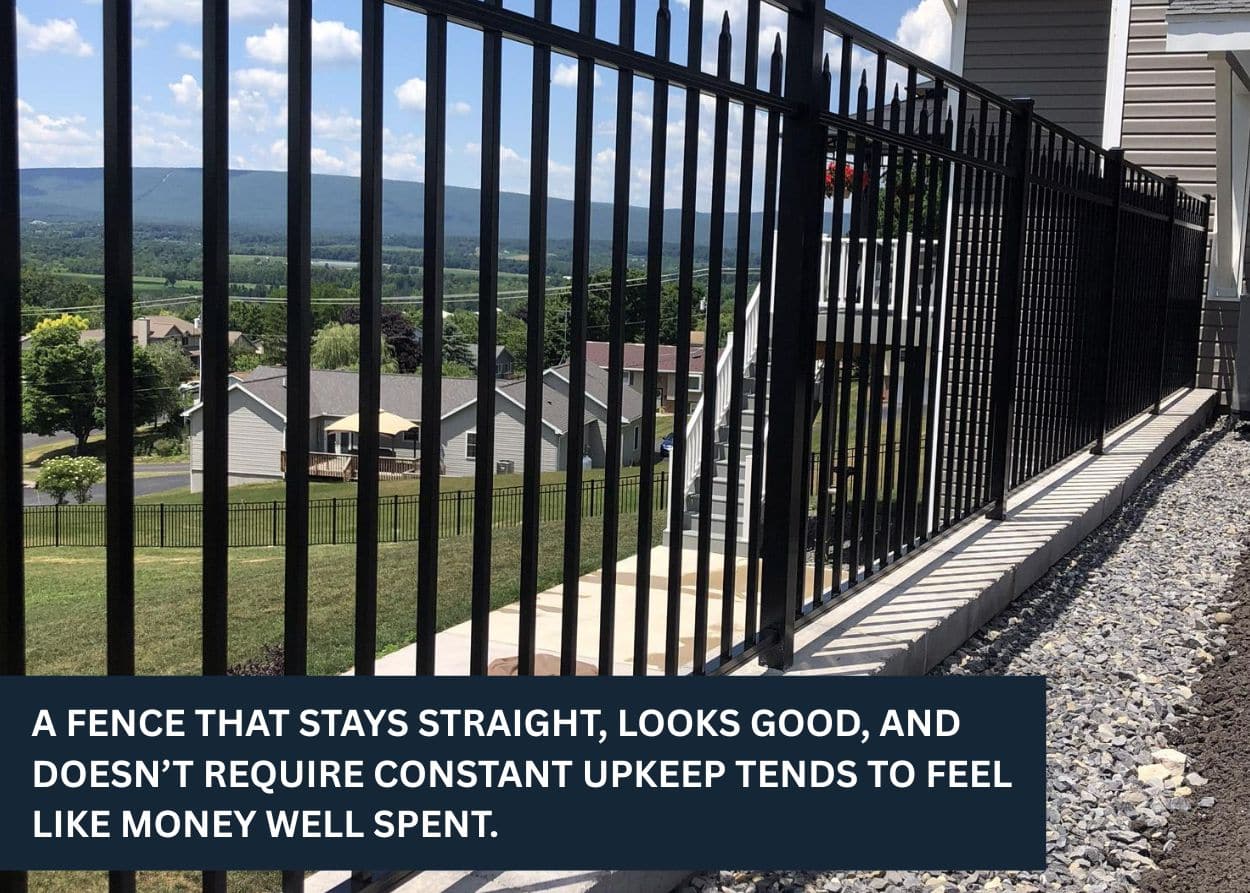
Aluminum is a favorite when homeowners want safety and a fence that looks sharp from the street.
A chain link fence is not fancy, but it’s extremely effective when installed correctly.
Good fences help keep diggers, climbers, and jumpers safely contained. Here are a couple of pointers for specific escape styles.
Jumpers are usually:
Common “jumper” types include many herding and working breeds (and mixes) that are quick and driven, such as Belgian Malinois, Border Collies, Australian Shepherds, and Jack Russell Terriers. That’s right—those tiny Jack Russell Terriers can jump 4 times their height!
For jumpers, install a taller fence and remove launch points near the fence, such as woodpiles, planters, and furniture.
Some dogs will climb because they’re agile, though also because they’re bored. We’ll talk about the boredom later.
Basenjis are a well-known example. These highly intelligent escape artists can easily scale fences and even jump gates.
Other similarly sneaky climbers are Siberian Huskies and Australian Cattle Dogs. Check out these Australian Cattle Dogs demonstrating their remarkable agility.
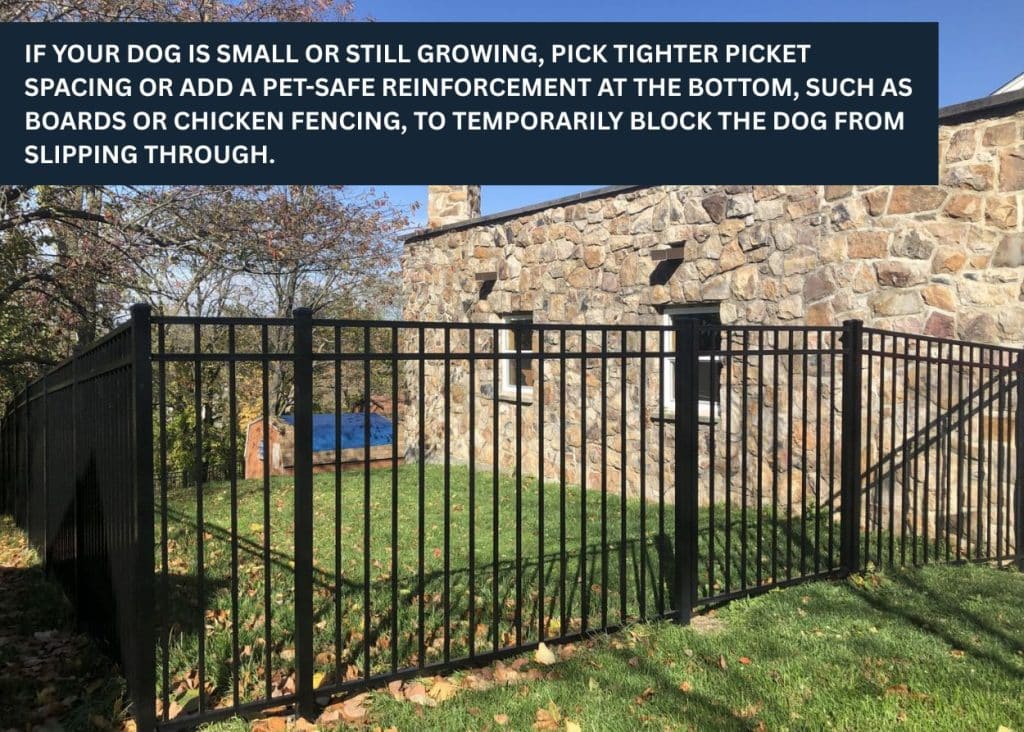
Small dogs will always squeeze through fence gaps. Toy breeds such as Chihuahuas, Yorkshire Terriers, Toy Poodles, and Papillons are obvious culprits here, as well as small terriers and just about any puppy.
If your dog is small or still growing, pick tighter picket spacing or add a pet-safe reinforcement at the bottom, such as boards or chicken fencing, to temporarily block the dog from slipping through. And as discussed earlier, Puppy Bumpers are highly effective in this case.
Dogs more likely to dig under the fence
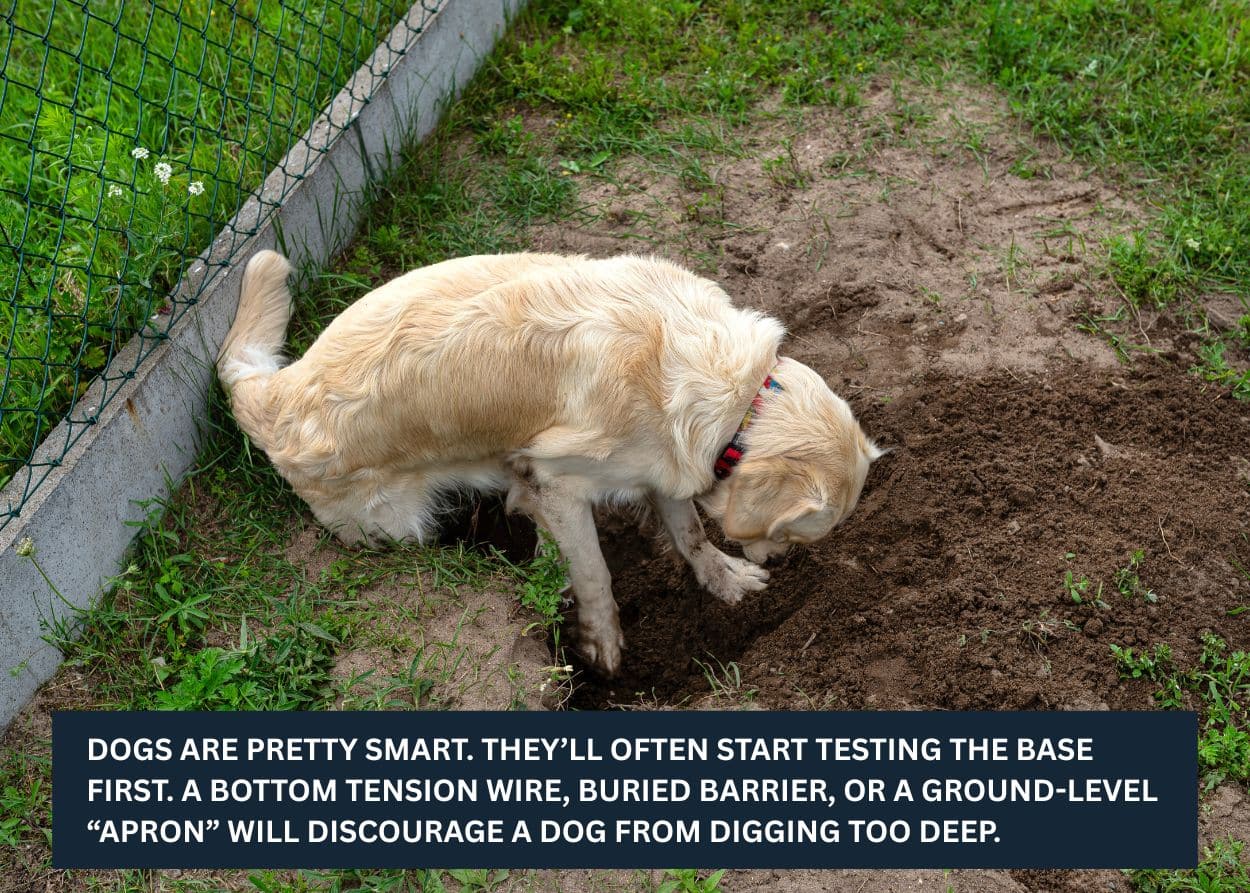
Digging isn’t a random behaviour. For some dogs, it’s instinctual.
Thick-coated Northern breeds like the Alaskan Malamute or Siberian Husky may be especially prone to digging, because these dogs may dig shallow beds in cooler earth to lie on, because it’s hot. A quick solution would be to provide plenty of cool shade for your dog and keep an eye on them so they don’t stay out in the sun too long.
Dachshunds are also ferocious diggers—bred for underground work with compact feet to push soil as they dig.
If your dog digs, it might be instinct, but it could also possibly be boredom, especially if your dog is not the digging type. If Rover typically doesn’t dig, try playing with him, changing up his routine, taking him out for a walk, or giving him some new toys—and see if that breaks the habit. Either way, your pup will thank you.
So if you need to dig-proof your fence, your fence plan must include a dig barrier—no matter which fence type you choose. And a couple of toys, of course.
To summarize, the best setup for the type of dog you have:
There’s a third option: Using both. A common strategy is:
The trick is to make sure the transition point (where aluminum meets chain link) is planned well—no gaps, no weak corners, no “easy test spot” for your dog.
So how do you build an escape-proof doggie fence? Here are a few starting points:
Jumpers need more height. Climbers need deterrents, such as adding an inward-tilting top section to discourage climbing, as the AKC suggests.
Most escapes start at the base, so plan for a buried barrier, an apron-style barrier, and a bottom tension wire.
A great fence with a weak latch is like a deadbolt on a door that doesn’t close. Ensure that your gate doesn’t allow your dog to slip out between the gaps, or unlatch the gate when nobody’s looking.
Move anything your dog can use as a step: stacked items, furniture, big rocks.
Corners are where dogs push, dig, and test.
Freeze/thaw and wet seasons can create small gaps near the bottom—especially in uneven yards.
Don’t assume “they won’t fit.” AKC notes that small dogs are notorious for slipping through openings.
Some breeds, like Basenjis, are infamous for climbing and escaping.
A fence isn’t a substitute for exercise, enrichment, and supervision—but it should keep your dog safe while you live your life.
Finally, if fireworks or thunderstorms are going off, keep them indoors. They’re safer at home with their family instead of being trapped in the backyard, where their fear and anxiety may cause them to try harder to escape, causing damage and injury.
It’s a normal evening, you open the back door, and your dog runs out—fast, happy, free, and still safely in your yard.
You’re not panicking, sprinting after them, or yelling for them to come back.
That’s what a proper fence does.
If you’re deciding between aluminum vs chain link fences for dogs, take these simple steps:
Or—if you’re still on the fence, reach out to us, and we’ll help you figure things out.
At Buffalo Valley Fence & Decks, we do both! We install pet-friendly aluminum and chain link fences in Central PA, whether or not you have a dog. With a team that aims to keep the process organized and the jobsite cleaned up from start to finish, you can be confident that a Buffalo Valley Fence is a fence that works and looks great.
Contact us today for an expertly-installed fence!