Wood vs Vinyl Fencing: Which One Really Fits Your Backyard
Summary:
This blog compares wood and vinyl fencing, highlighting their differences in cost, durability, maintenance, aesthetics, and installation. While wood is initially cheaper and offers more customization, it requires more upkeep and has a shorter lifespan. Vinyl, though more expensive upfront, provides greater durability, minimal maintenance, and a longer service life, making the choice dependent on budget, desired style, and willingness to perform maintenance.
Do you ever stare at your empty yard and dream of a crisp fence line—kids safe, dog contained, curious neighbors’ eyes politely blocked? That vision starts with a single choice: what’s the fence made of?
Choosing the rightfencing material is the hinge on which that dream swings. Today, we pit two classics head-to-head—wood and vinyl—so you can invest with confidence.
AtBuffalo Valley Fence & Decks, we install miles of both wood and vinyl fencing every season, so we know how each one handles Central PA’s wild swings from July heat to January freeze. In the next few minutes, we’ll line them up side by side—cost, durability, upkeep, style, and installation quirks—so you can decide with confidence.
Let’s break it down—quick, clear, and from a local expert’s view.
Table of Contents
The 60-Second Snapshot
Up-Front Cost
Durability & Maintenance
Aesthetics & Customization
Installation: DIY vs. Pro
Environmental Footprint
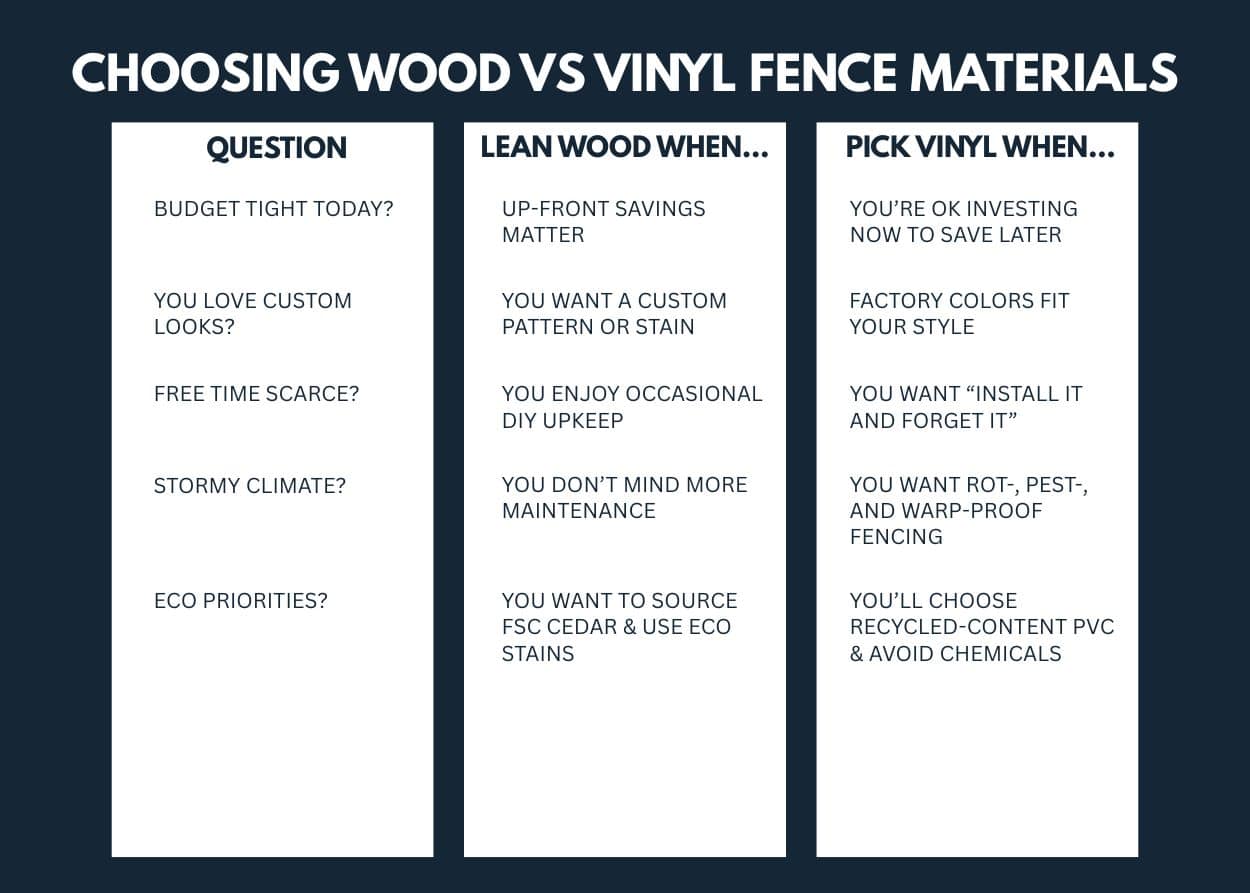
Quick-Glance Scorecard
Ready to Decide?
The 60-Second Snapshot
To give you a quick overview, here’s a side-by-side snapshot of how wood and vinyl stack up in terms of price, lifespan, and more. This will help you quickly compare the basics before we dive into the details.
WOOD
VINYL
Up-front price
(installed)
≈ $18 – $40 per linear foot
≈ $30 – $50+ per linear foot
Typical lifespan
15-20 years
20-30+ years
Annual upkeep
Stain/paint every 3-5 years
(≈ $3 – $14 per linear foot)
Hose-off cleaning
Custom looks
Unlimited cuts, caps, and stains
Multiple colors & panel styles,
but fixed shapes
DIY friendliness
2-5 day task; wood cutting and concrete skills needed
1-3 day task; basic construction skills needed
This lightning-fast chart gives you a feel for the matchup, but it’s only the opening round. The numbers hint at the story, yet the real picture comes into focus when we zoom in on durability, maintenance, curb appeal, and installation. Let’s unpack those next.
Up-Front Cost: Dollars on Day One
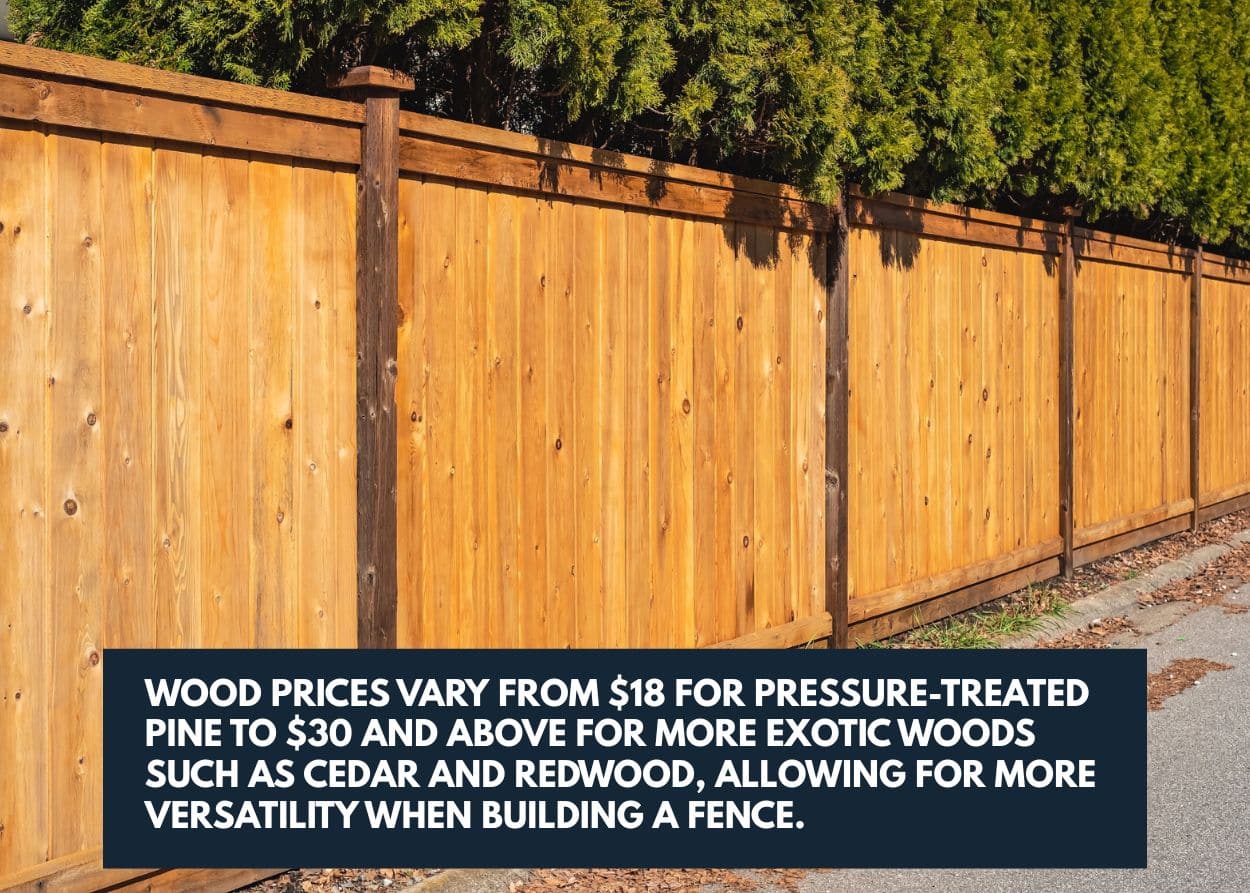
Wood wins the sticker-price battle if your budget is tight right now. Pressure-treated pine privacy panels often land between $18 and $25 per linear foot installed, while cedar or redwood push that closer to $30–$40. Wood shows up as raw boards and rails, which means more cutting and fastening on-site but less sticker shock at checkout.
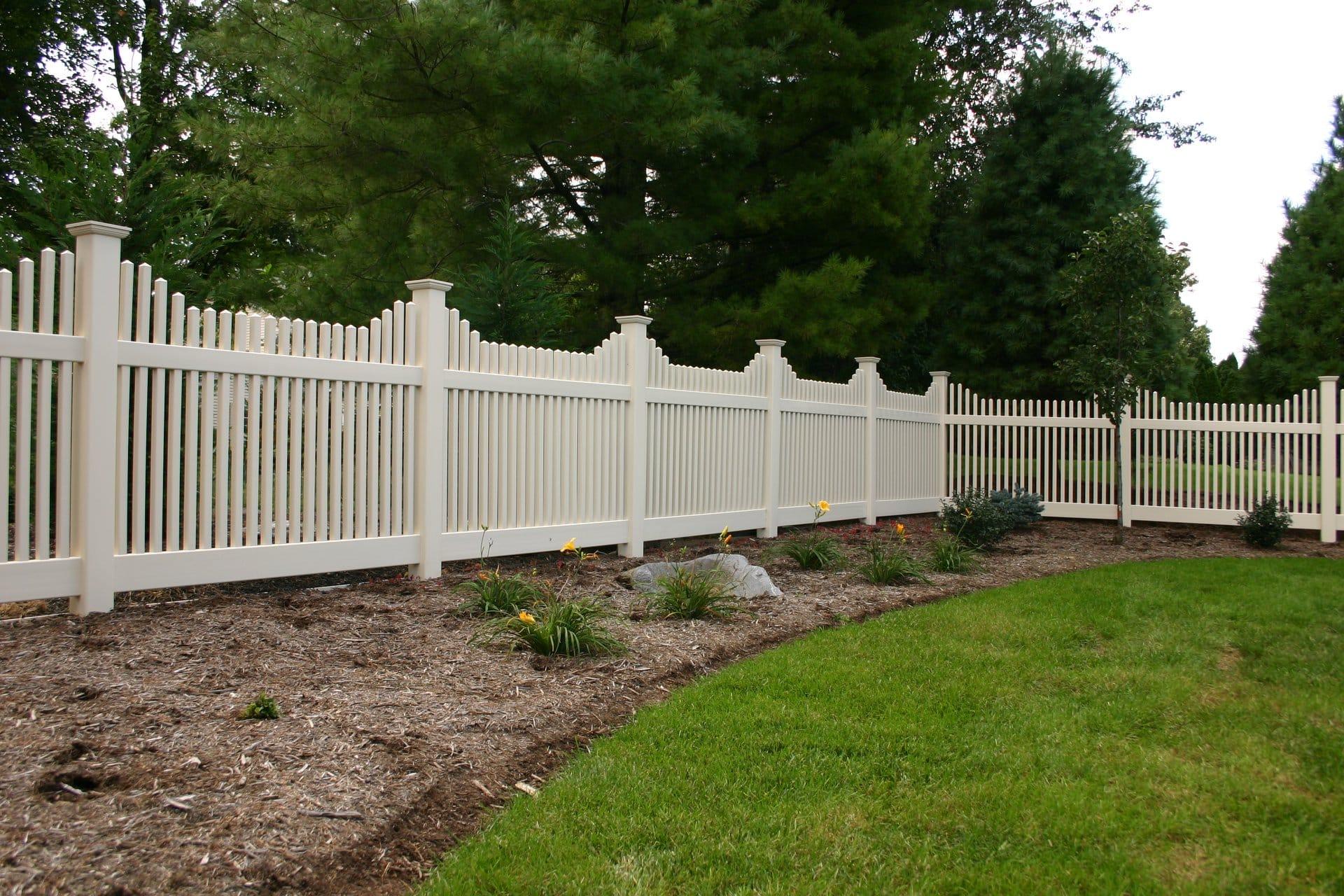
By contrast, vinyl rarely starts below $30 per linear foot installed and can climb to $50+ for tall privacy styles or rich wood-grain textures.Why the jump? Vinyl panels arrive as factory-routed posts and interlocking panels—color locked in and hardware included—so you’re paying for convenience and long-term staying power. You’re paying for factory labor now to skip yard labor later.
But hold up —up-front cost is only chapter one in the total-cost story. Repairs, re-staining, and earlier replacement can flip the math over the fence’s lifetime.
Durability, Weather Resistance, & Maintenance
Rain, snow, blistering sun—Central PA throws the whole forecast at your fence. How each material withstands (or sags under) that abuse is where the real value shows up. Let’s see which one keeps standing tall when the weather turns ugly.
Think of wood like real leather boots. They look sharp but hate water. Sun bleaches boards, freeze-thaw cycles can warp boards, and insects slowly nibble away, leaving most fences ready for replacement after 15-20 years—even faster with untreated pine. The fix? A power-wash each spring and a fresh coat of stain or sealant every three to five years. Budget both the cost of supplies and the Saturday afternoons you’ll spend brushing them on. Average price tag for each stain cycle? $3-$14 per linear foot.
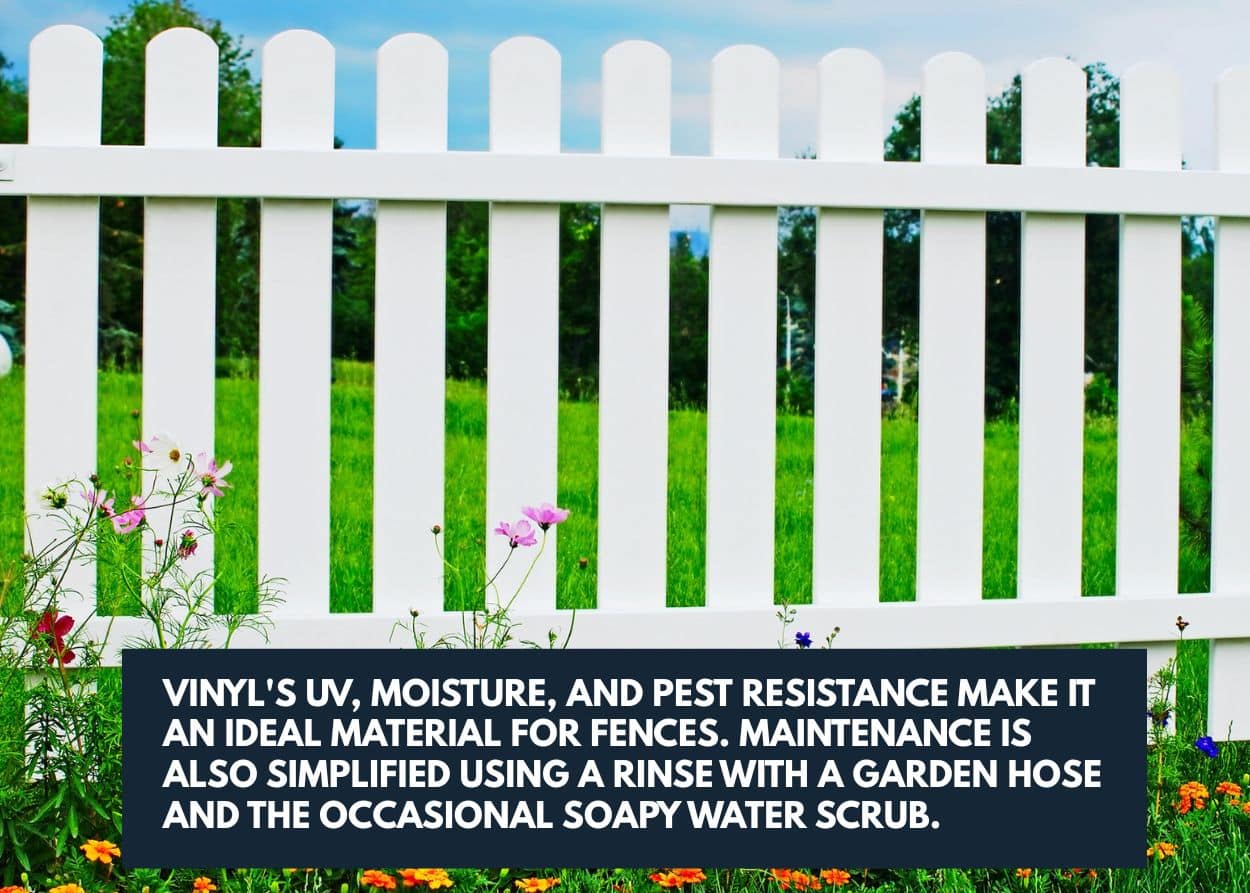
Vinyl plays the high-tech hiker’s boot. UV inhibitors keep panels from yellowing, moisture can’t penetrate, and termites simply walk away. Lifespans of 25 years or more are common with minimal fading. Upkeep is basically a garden hose rinse plus the occasional soapy water scrub where algae tries to camp out. No splinters, no peeling paint, no annual trips to the hardware store.
Bottom line: Wood offers timeless character but trades it for regular chores and a shorter service life. Vinyl costs more upfront, yet repays you in free weekends and extra decades of worry-free performance. Choosing the right fence for you depends on your values and what you think looks right with your property.
Aesthetics & Customization: The Curb-Appeal Factor
Your fence isn’t just a barrier—it’s a frame for your entire backyard story. Before we dive into budgets and maintenance, let’s talk about curb appeal and how each material expresses your style.
Wood’s superpower? Character. Cut decorative tops, mix board widths, splash on any color, or leave cedar to weather into a silvery gray. It pairs with cottage charm or modern black stain alike.
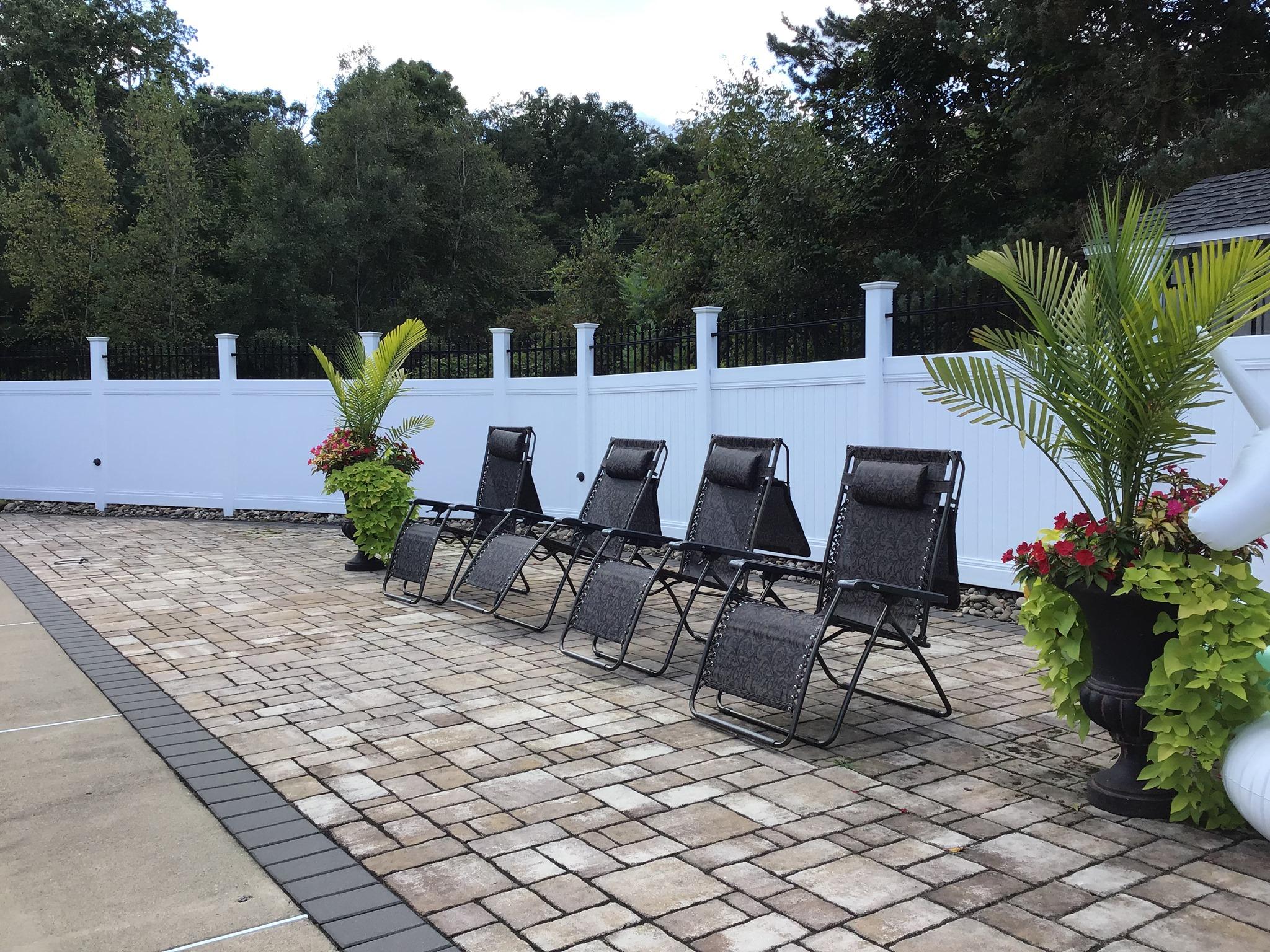
Vinyl has broadened its palette. You’ll find wood-grain textures, rich browns, and modern grays straight from the factory. But remember—panels are factory-formed. If you crave a one-of-a-kind scallop or lattice, wood still holds the crown.
Ultimately, beauty lives in the eye of the homeowner. Choose the look that sparks joy every time you step outside, and you’ll love your fence long after the installation crew packs up.
Installation: DIY vs. Pro Labor
Why does this matter? Labor can equal or exceed the material cost.
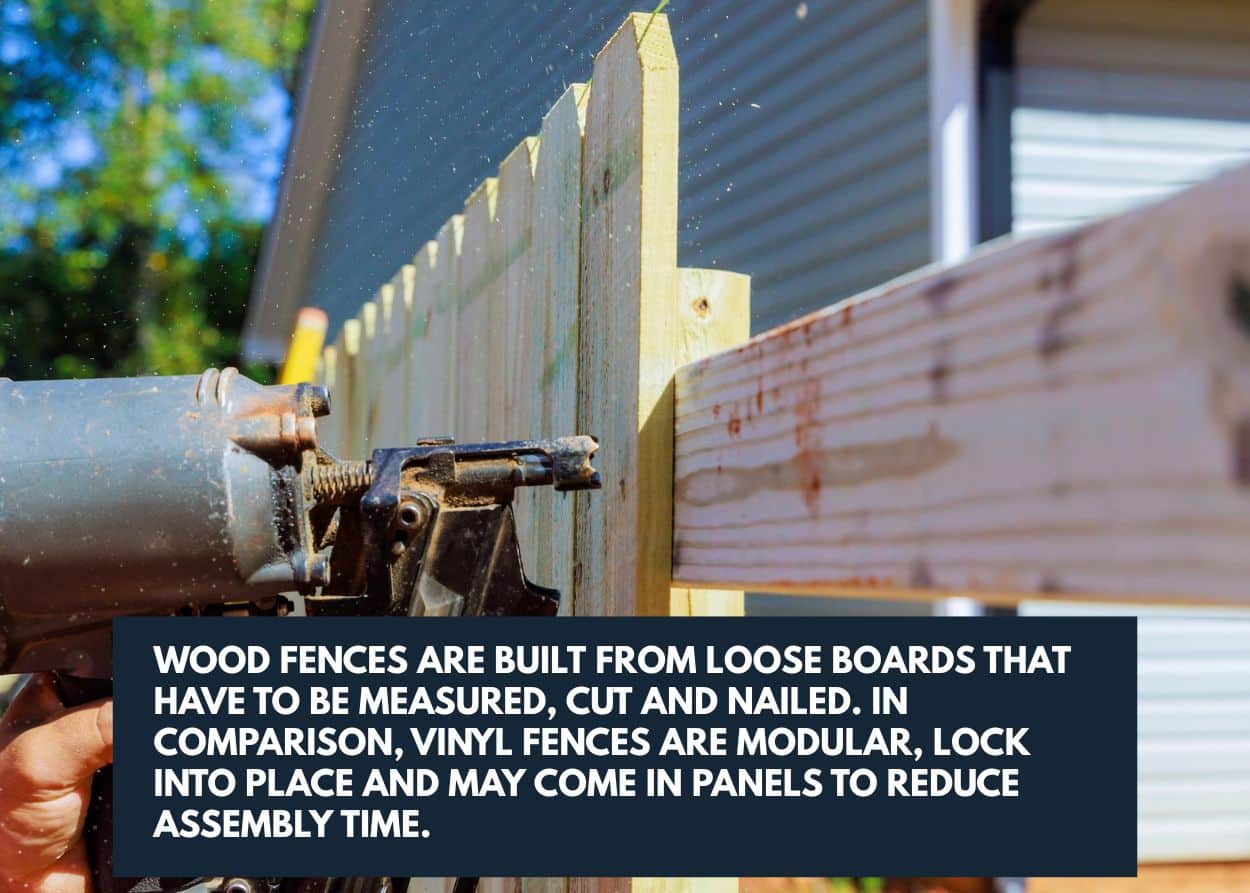
Wood: Boards arrive loose. Each picket gets nailed, the rails are leveled, and the posts are set in concrete. For an average suburban lot, a two-to-four-day job is typical—even longer if the terrain is rocky or sloped. To prolong the life of your wooden fence, pickets built by Buffalo Valley Fence are screwed together using ceramic screws, which will not rust over time. Vinyl: A vinyl fence is built on-site. Posts are installed first; lightweight panels slide and lock into place with hidden fasteners. If there are no gates involved, it can be a one-day project; however, with larger projects or if there are gates, a concrete base for the gate posts is poured before the gate is installed. Many pros wrap a full yard in a single day, partly offsetting the higher material price. Some homeowners can also take on smaller runs solo with basic tools.
Need a gate? Vinyl kits arrive pre-squared with hinges and latches, while wood gates are built on-site—meaning extra carpentry, more chances for sag, and additional hardware trips.
Bottom line on installation? A seasoned crew—like the team at Buffalo Valley Fence & Decks—already owns the equipment, laser levels, and know-how to set posts plumb the first time. Factor that peace of mind into your budget before you decide who’s swinging the hammer.
Environmental Footprint: Going Green
Here’s where opinions split.
Wood feels earth-friendly because, well, it grew in a forest. If you choose FSC-certified cedar or pine from responsibly managed stands, the boards are a renewable resource that produced vital oxygen while the tree was alive and will eventually biodegrade at the end of the fence’s life. The catch? Pressure-treating chemicals, oil-based stains, and repeated recoating add both VOCs and recurring carbon hits. Skip the chemicals and maintenance, and that same fence will rot out much faster—doubling the harvest cycle.
Vinyl flips the script. PVC production requires more energy and petroleum upfront, and the material isn’t biodegradable. Yet a panel that lasts 30 years with nothing more than a hose rinse avoids gallons of stain, replacement boards, and landfill waste from an early tear-out. Some manufacturers now blend recycled PVC or offer take-back programs that grind old panels into new rails, further reducing the life-cycle footprint.
So, which option wins? It depends on how the wood is sourced, how long the fence stays put, and whether your vinyl supplier can prove recycled content. The greenest fence is the one that lasts longest with the fewest chemical add-ons—choose accordingly.
Quick-Glance Scorecard
Ready to Decide? Let’s Talk Next Steps
Choosing between wood and vinyl fencing feels a bit like choosing between a classic pickup and a modern EV. Both carry your family; both demand cash. But how they serve you—maintenance, lifespan, vibe—differs.
Still unsure? The crews at Buffalo Valley Fence & Decks have installed thousands of linear feet of both wood and vinyl fencing across Central PA’s hills and hollows. We can walk your property, budget in hand, and show real-world samples so you can see the difference before you sign.
And the best part? One conversation could save you years of regret over your fence.
Ready to boost your curb appeal and gain peace of mind?